

Halogen-Free PCB Requirements
A halogen-free PCB requirement needs two definitions: the concentration limits being applied and the materials covered by the declaration. Without both, a statement about a laminate can be mistaken for a statement about an entire assembled product. Treat halogen content, restricted-substance compliance and flammability as separate requirements that may need separate evidence.
This distinction makes material selection more precise. It also prevents an environmental label from being used as an unsupported claim about electrical performance or fire behavior.
Why Designers Request Halogen-Free Materials
Customers may specify reduced bromine and chlorine content as part of their material policies. That can lead to different flame-retardant chemistry from a conventional brominated resin formulation. The requirement should be recorded explicitly rather than inferred from a product's industry or sales destination.
Reducing certain constituents does not prove that every combustion product is harmless. Smoke generation, toxicity and corrosivity depend on the actual formulation and test conditions. If those properties matter to the application, request the corresponding evidence instead of using “halogen-free” as a substitute.
Likewise, avoid assuming that all applications in an industry have the same requirement. A customer material specification can be stricter than the baseline regulatory requirement, and a specialized product can need additional tests. The material declaration must answer the requirement actually written into the project.
Read the Concentration Limits Correctly
For the laminate context commonly associated with IEC 61249-2-21, the familiar limits are 900 ppm maximum chlorine, 900 ppm maximum bromine and 1,500 ppm maximum for their sum. IPC's standards-related guidance summarizes these limits.
They are concentration limits, not a promise of zero halogen atoms. They also do not mean that a certificate for one laminate automatically describes every material in a finished board or assembly. State the standard, revision and declaration scope used by the supplier.
When ordering a bare PCB, clarify whether the requirement includes laminate, prepreg, solder mask and any other relevant permanent materials. For a PCBA, components, cables, adhesives, coatings and process materials can introduce additional declaration boundaries. The contractual scope should explain what is included and how it will be verified.

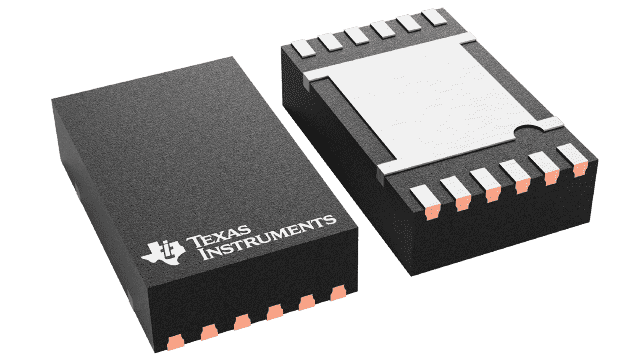
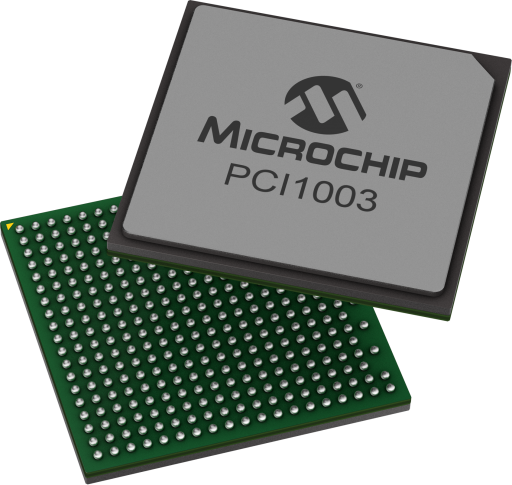
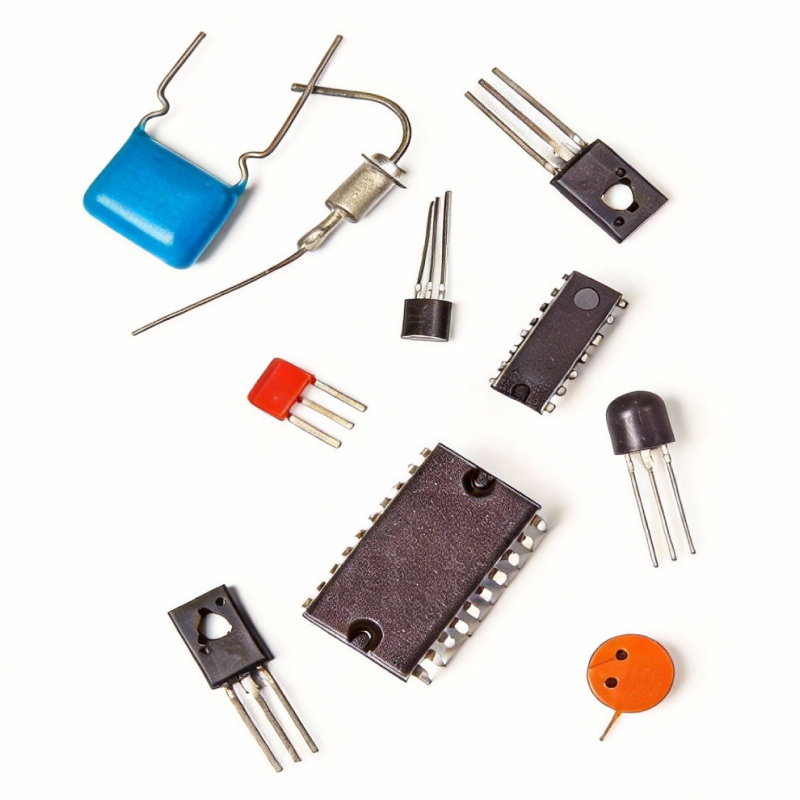
Figure 1: A material declaration does not automatically extend to every material in a board or assembled product.
Separate Halogen Content from RoHS and REACH
RoHS and halogen-free requirements are not interchangeable. The European Commission's RoHS overview identifies restricted substances including PBB and PBDE; it does not describe a blanket prohibition on every bromine- or chlorine-containing material.
A halogen-free declaration therefore cannot establish RoHS compliance by itself, and a RoHS declaration cannot establish the requested total bromine and chlorine limits. REACH involves a further set of substance obligations that also need the appropriate supplier information.
Maintain these documents as separate evidence in the material approval. This is especially important during substitution: accepting a RoHS statement in place of a halogen-content declaration changes the question being answered.
Compare the Actual Material Properties
Halogen-free grades are available with different electrical and thermal characteristics. The formulation label does not guarantee lower loss, lower moisture uptake, higher Tg or longer service life.
For a proposed replacement, compare the properties relevant to the design under consistent conditions. That may include Dk and Df at the working frequencies, thickness-direction expansion, Tg measurement method, thermal exposure limits and the available glass/resin constructions. Retain any conditioning and typical-value qualifications.
Flammability needs its own check at the required material and thickness. A halogen-free formulation can be engineered to meet a flame classification, but the classification must be verified for the specific grade rather than assumed from its chemistry.
The useful tradeoff is between complete qualified constructions. A price premium without corresponding material and process information says little about whether the candidate is appropriate. Nor should a quoted cost difference be presented as a universal percentage for all halogen-free boards.
Recheck Manufacturing Compatibility
A change of resin system can affect lamination, drilling, hole preparation and dimensional behavior. Ask the fabricator whether the proposed material is covered by an established process for the required stackup.
There is no universal trace width, annular ring or solder-mask expansion that follows solely from the words halogen-free. Use the design rules for the actual construction and process. Keeping the original routing unchanged is reasonable only after those constraints and the electrical assumptions have been checked.
For controlled-impedance designs, confirm that the fabricator's material data and finished dielectric thickness match the approved stackup. A similar nominal Dk at one frequency does not prove an unchanged transmission line across the relevant bandwidth.
Make the Declaration Reviewable
Record the exact material designation, the covered constituents or material set, the applicable concentration limits and the supporting declaration or test report. Connect that record to the order and define how a substitution will be approved.
If testing is required, agree on the method, sample preparation and material scope with the responsible laboratory. A result from one selected material should not be represented as a complete assembly assessment unless the sampling and requirement support that conclusion.
This documentation is the original value of a careful specification: it lets another reviewer determine what was checked, what was supplied and what remains outside the claim.
Conclusion
Select halogen-free PCB materials against a clearly stated scope, then verify electrical performance, thermal behavior, flammability and manufacturing compatibility separately. A precise declaration is more useful than a broad environmental promise.
Frequently Asked Questions
Q1: Does RoHS compliance mean that a PCB is halogen-free?
No. The requirements address different substance questions. Obtain a declaration that explicitly addresses the requested bromine and chlorine limits and the relevant material scope.
Q2: Does halogen-free mean low smoke or nontoxic smoke?
No. Those are separate performance claims. Use appropriate test evidence if smoke, toxicity or corrosivity is a design requirement.
Need Help With PCB Manufacturing or PCBA Assembly?
Share your material scope and documentation requirements with icallin through our dedicated quotation page.