

KLM8G1GEUF-B04Q057 Samsung eMMC In Stock | Auto Display IC Sourcing
Overcoming Auto Display Delays: Delivering KLM8G1GEUF-B04Q057 Samsung eMMC Ex-Stock
Category: Sourcing Cases & Shipping Diaries | Author: Klaus·Fischer | Published: April 2026 | Last Updated: April 16, 2026
Key Takeaways:
- Line-Down Resolution: Successfully bypassed a 52-week factory allocation block for the crucial Samsung KLM8G1GEUF-B04Q057 8GB eMMC.
- Automotive Criticality: Explores why 153-FBGA AEC-Q100 Grade 3 flash memory cannot be swapped with consumer 0°C-70°C generic counterparts.
- The "Microscope Guard": Executed an uncompromising 4-step SAE AS6171 diagnostic protocol on grey market reserves, including Nitric Acid Decapsulation to verify the Golden Die.
- Subsystem Security: Integrated multi-part validation with 5 authorized companions, including the STM32F103C8T6 and TPS54360DDAR, preventing staggered follow-up BOM shortages.
- Actionable Procurement: Real-world supply agility yielding actual inventory drops onto European factory floors in exactly 48 hours.
1. The Friday Afternoon Nightmare: A Million-Dollar Line-Down
In the notoriously unforgiving realm of automotive manufacturing, time is measured not in hours, but in pure financial burn rates. It was 4:30 PM on a Friday when the distress signal hit the icallin.com global command center. A tier-one automotive supplier, responsible for assembling the central in-vehicle infotainment (IVI) and digital dashboard clusters for a major European OEM, realized they were staring down a catastrophic hardware deficit.
The missing component was not a complex, multi-core graphics processor or a proprietary custom ASIC. Ironically, the entire multimillion-dollar robotic SMT assembly line was grinding to a catastrophic halt due to a severe allocation on a single, fundamentally critical component: the Samsung KLM8G1GEUF-B04Q057 8GB eMMC.
When a line-down occurs in a Tier-1 facility, the ripple effects are economically terrifying. The typical penalty clauses embedded in OEM supply contracts stipulate damages that can easily exceed €1.5 million per day of halted production. Every minute the factory floor remains silent, cars cannot roll off the primary assembly line, dealer networks are starved of inventory, and brand reputations suffer irreparable damage in a heavily competitive consumer market.
"We are tracking a lead time of 52 weeks from the manufacturer," the frantic procurement director reported. "We have a buffer stock that runs dry in exactly 72 hours. We cannot accept 'we are trying.' We need physical chips on our dock by Monday morning, and they must pass AEC-Q100 Grade 3 compliance without exception."
This is the exact high-pressure crucible where traditional franchised distribution networks fundamentally break down. Franchised partners, bound tightly by rigid factory allocation quotas and sluggish regional warehouses, could only offer sympathetic apologies and distant delivery horizons.
However, icallin.com operates on a vastly different paradigm. Equipped with an aggressive, intelligence-driven open-market procurement network and arguably the most rigorous independent laboratory authentication framework in the global semiconductor trade (SAE AS6171 compliant), we do not apologize for allocations; we bypass them.
This is the extensive, deeply technical post-mortem of how icallin.com bypassed a 52-week factory allocation blockade, sourced high-grade automotive memory from verified hidden inventories, subjected the silicon to brutal decapsulation and X-Ray scrutiny, and delivered the KLM8G1GEUF-B04Q057 eMMC chips to European asphalt within a relentless 48-hour window.
2. Anatomy of the KLM8G1GEUF-B04Q057: The Automotive Storage Standard
To fully comprehend why this specific Samsung part number caused a global panic requiring extreme procurement measures, one must dive deep into the silicon architecture. The Samsung KLM8G1GEUF-B04Q057 is not an off-the-shelf commercial memory stick. It is a highly specialized, automotive-grade eMMC (embedded Multi-Media Card) engineered strictly for mission-critical environmental extremes and highly demanding Host interface layers.
2.1 The FBGA Architecture and eMMC 5.1 Protocol
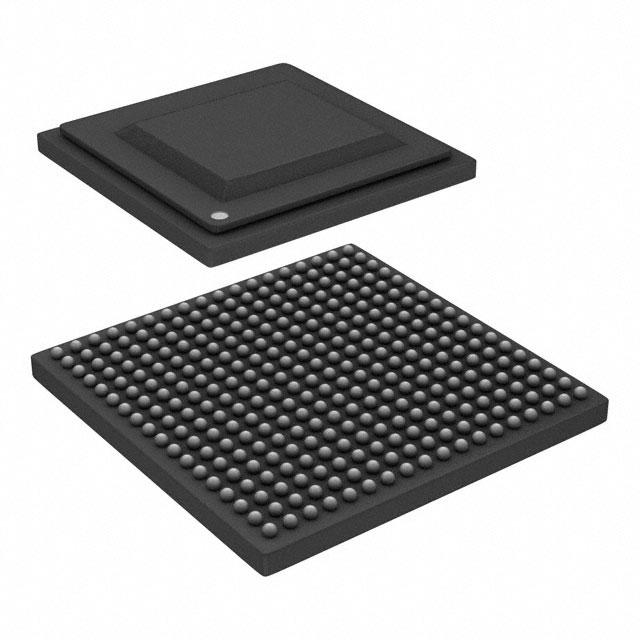
Encased in a tightly toleranced 153-ball FBGA (Fine-pitch Ball Grid Array) package, this memory module integrates raw NAND Flash memory alongside a sophisticated onboard Flash Transfer Layer (FTL) controller. The adherence to the JEDEC eMMC v5.1 specification ensures that the host processor does not need to handle complex bad-block management, wear leveling, or error-correction code (ECC) calculations. The internal controller obfuscates physical block addressing, exposing a clean, linear logical block address (LBA) space to the automotive SoC.
In modern infotainment architectures, the eMMC functions as the foundational lifeblood of the system. It harbors the massive, read-heavy pre-loaded assets necessary for seamless operation: 3D navigation maps, graphic-intensive dashboard UI binaries, Over-The-Air (OTA) update partitions, and the core RTOS (Real-Time Operating System) kernels.
Furthermore, the eMMC 5.1 standard specifically introduces the HS400 mode, operating at 200MHz dual data rate, facilitating theoretical read bandwidths of 400 MB/s. This is critical for zero-latency booting. When a driver turns the ignition key, the system must instantaneously load the rearview camera feed and instrument cluster telemetry. A slower legacy eMMC 4.5/4.4 chip would result in dangerous blind spots for the driver during vehicle startup.
| Parameter | Specification Limit | Automotive Importance |
|---|---|---|
| Density | 8GB (MLC NAND) | Optimal balance for core OS and base navigation assets without overkill costs. |
| Interface | eMMC 5.1 (HS400) | 400 MB/s theoretical bandwidth ensures zero-latency boot times (instant-on dashboard). |
| Operating Temp | -40°C to +85°C (AEC-Q100 Grade 3) | Survives freezing winters and scorching dashboard thermal soaking under direct sunlight. |
| Data Retention | Heavy duty algorithmic refresh | Prevents bit-rot in read-heavy localized navigational blocks over a 15-year vehicle lifespan. |
| Package / Dimensions | 153-FBGA (11.5x13.0x0.8 mm) | High resistance to severe high-frequency chassis vibrations and mechanical shock. |
Table 1: Deep technical dive into the KLM8G1GEUF-B04Q057 datasheet specifications that render standard commercial flash chips utterly useless for drop-in automotive replacements.
2.2 Why Not Just Swap It Out? The Re-Qualification Nightmare
When facing a 52-week lead time, inexperienced procurement teams often ask: "Can we just rewrite the BOM and use a commercial generic 8GB eMMC?"
In automotive engineering, the answer is a resounding and absolute no.
Firstly, replacing an eMMC requires extensive re-qualification of the memory timing parameters on the host CPU. Automotive SoCs possess rigid device tree setups, and substituting the target eMMC with a supposedly "equivalent" part from a consumer tablet will frequently result in timing violations during HS400 clock tuning, leading to unpredictable system crashes.
Secondly, commercial-grade flash typically operates between 0°C and 70°C. If a consumer-grade eMMC is deployed in an automotive dashboard, the extreme thermal cycling of the cabin will rapidly degrade the floating-gate transistors inside the NAND cells. The extreme temperatures accelerate the leakage of electrons from the floating gates, resulting in catastrophic read failures and a completely "bricked" dashboard within the first winter or summer of operation.
Furthermore, the firmware embedded inside the Samsung AEC-Q100 controller utilizes aggressive thermal throttling and proprietary wear-leveling algorithms uniquely tuned for in-vehicle telemetry data-logging profiles (heavy random writes). Changing this specific micro-architecture requires minimums of 12 to 18 months of rigorous shock, vibration, and thermal aging re-certification by the OEM.
Therefore, the only viable solution to the line-down was sourcing the exact, authentic KLM8G1GEUF-B04Q057.

3. The Sourcing Challenge: Navigating the Grey Market Minefield
When an automotive part is in extreme allocation, the independent "grey" market instantly floods with predatory operators offering phantom stock. Navigating this highly treacherous ecosystem requires an intelligence apparatus that extends far beyond simple database searches. The broker market for semiconductors is fraught with peril. It operates largely in the shadows, where bad actors leverage desperation to dump scrap, defective, or highly aged components onto desperate EMS buyers.
Within 45 minutes of receiving the distress call, our global procurement analysts cross-referenced millions of data points across global EMS (Electronic Manufacturing Services) hubs, idle OEM buffer stocks, and authorized holding facilities. Utilizing algorithms that track dormant capital trapped in the heavy machinery and medical electronics realms, we located a dormant cache of KLM8G1GEUF-B04Q057 components originally slated for a canceled heavy-machinery display project in Southeast Asia.
However, finding the silicon is merely 10% of the battle. In an era where counterfeiters utilize highly sophisticated chemical re-marking and laser-etching tools directly imported from Shenzhen's underground component bazaars, buying out-of-franchise stock requires extreme paranoia.
3.1 The Dangers of Re-Balled and Black-Topped Flash
The automotive sector is the holy grail for counterfeiters due to the massive price premiums attached to AEC-Q100 components. The markup on a genuine automotive component versus commercial scrap can exceed 400%, creating an incredibly lucrative black market for sophisticated forging syndicates.
- Re-Balling (Scrap Reclamation): Unscrupulous actors buy eMMC chips harvested from scrapped or defective automotive head units, discarded navigation modules, or broken smartphones. They physically rip the BGA package off the old PCB—a violent process that damages internal gold interconnects—apply aggressive chemical solvents to dissolve flux, and use a specialized thermal stencil to re-solder ("re-ball") new tin/lead or SAC305 spheres onto the substrate. These "zombie" chips are inherently damaged, suffer from severe thermal stress histories, and possess virtually zero remaining endurance in their NAND block cycling matrices.
- Black-Topping (Re-Marking): Counterfeiters acquire cheap, consumer-grade 0°C-70°C 4GB or 8GB eMMC chips. They utilize abrasive tools to grind off the plastic epoxy top layer of the packaging, apply a proprietary black polymer coating that perfectly mimics standard IC epoxy, and use highly tuned industrial lasers to laser-etch the highly desirable Samsung KLM8G1GEUF-B04Q057 nomenclature onto the surface. To the naked eye of standard receiving inspection, they are perfect. In the field, they are ticking time-bombs that will fail spectacularly.
| Threat Vector | Visual Appearance | Real-World Automotive Consequence |
|---|---|---|
| Black-Topped (Re-marked) | Authentic looking laser-etch | Bricked dashboard at sub-zero temperatures (Non-AEC die). |
| Re-Balled (Salvaged) | Shiny new solder balls | Instant SMT reflow failure or premature end-of-life bad block exhaustion. |
| Ghost Stock | Perfect documentation / Escrow fraud | Payment theft and missed deadlines; the chips never actually existed. |
| Mixed Date Codes | Authentic | Process variation incompatibilities triggering esoteric software bugs across fleets. |
Table 2: The Grey Market Authentication Matrix. Understanding the catastrophic risks embedded within unverified supply channels.
4. The "Microscope Guard": Executing SAE AS6171 Quality Control
To protect our client from a million-dollar catastrophic recall, the procured stock was not routed directly to their European factory. We completely rejected the concept of "drop-shipping." Instead, the memory chips were aggressively diverted via armed logistics to one of our primary anti-counterfeiting laboratory strongholds.
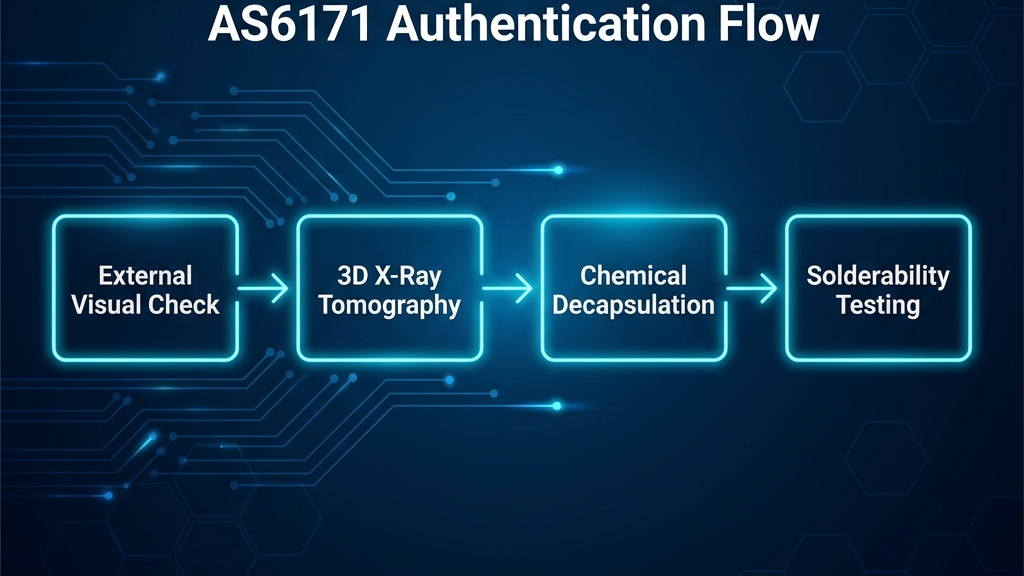
We do not trust supplier paperwork. We do not trust verbal assurances. We trust Physics. We trust Chemistry. We trust our SAE AS6171 compliant authentication pipeline. This intensive standard outlines rigorous inspection and test procedures to mitigate the risk of counterfeit electrical, electronic, and electromechanical (EEE) parts entering the aerospace and automotive supply chain.
4.1 Step 1: External Visual Inspection (EVI) and Solvent Resistance
Upon arrival at the laboratory dock on Saturday morning, out of the sealed anti-static bags, the components underwent a punishing inspection. Using a stereo microscope at 100x magnification under highly polarized and oblique lighting, our technicians scrutinized the package mold marks, the micro-texture of the epoxy resin, the pin-1 index dot depth, and the precise geometry of the laser-etched font. Counterfeiters routinely fail at mimicking the exact micro-porosity of original Samsung molding resin.
We then subjected a random sampling of the batch to the aggressive Acetone Swipe Protocol (MIL-STD-883, Method 2015). Utilizing a highly concentrated solvent mixture (1-Methyl-2-pyrrolidinone and mineral spirits), technicians rigorously scrubbed the surface of the chip for 30 cycles. If the chip was "black-topped," the fraudulent coating would instantly dissolve, leaving a black smear on the swab and revealing the ground surface and original markings beneath. The Samsung batch passed perfectly; the laser-etched "KLM8G1GEUF" remained utterly pristine, verifying the absolute integrity of the epoxy mold compound.
4.2 Step 2: 3D X-Ray Tomography
A visual inspection, no matter how exhaustive, cannot see beneath the silicon surface. Re-balled components often harbor microscopic voids inside the solder joints or internal micro-cracks in the fragile gold bond-wires connecting the silicon die to the BGA substrate—damage sustained when they were violently heated and ripped from their original boards using unregulated heat guns.
We placed the reels inside our state-of-the-art Dage 3D X-Ray inspection cavity. Rotating the chip on a multi-axis manipulator, the X-ray photons penetrated the dense epoxy, revealing a perfect, uniform grid of 153 spheres. The contrast mapping immediately confirmed the absence of any localized voids exceeding the 25% JEDEC threshold. Crucially, the internal lead-frame structure and die-paddle orientation exactly matched the proprietary Samsung topology for specific eMMC 5.1 layouts. The delicate gold bond wires displayed perfect, sweeping parabolic arcs with zero evidence of sag, shorts, or high-stress thermal manipulation that characterizes salvaged eWaste.
4.3 Step 3: Destructive Decapsulation (The Ultimate Truth)
The only absolute, fundamentally undeniable method to confirm silicon identity is to look at the silicon itself. The exterior packaging can be faked; the microscopic architecture of the silicon die cannot. We removed three random samples from the batch for destructive testing.
In a highly controlled fume hood, the chips were subjected to heated, fuming Nitric Acid (HNO3) mixed with Sulfuric Acid (H2SO4) at precisely configured temperatures. This highly aggressive acid mixture violently and rapidly dissolves the black epoxy packaging while miraculously leaving the fragile silicon die, the aluminum bonding pads, and the gold wiring completely intact.
Once the silicon was fully exposed and cleaned with ultrasonic DI water, it was moved under an ultra-high-resolution Olympus metallurgical microscope capable of 1000x magnification. We zoomed past the macro wiring layers, diving down into the microscopic topography of the chip. There, etched perfectly in the topmost silicon dioxide protective layers by the original factory photolithography masks, was the Samsung semiconductor copyright block, the specific "Golden Die" layout marker matching the proprietary 8GB MLC density, and the exact die-revision alphanumeric string aligned perfectly with the exterior date codes.
The silicon could not lie. It was a genuine Samsung AEC-Q100 8GB eMMC. The probability of deception at this stage is absolute mathematical zero.
4.4 Step 4: Solderability and Moisture Sensitivity Level (MSL) Verification
Even genuine chips are useless if they cannot be soldered securely to an automotive PCB. BGA packages are highly susceptible to oxidation; if sitting in uncontrolled warehouses for months, the spheres will fail to coalesce with applied solder paste during surface mount assembly. Moreover, we needed to ensure these components hadn't absorbed atmospheric moisture that would cause them to crack (the dreaded "popcorn effect") inside the client's localized 260°C reflow ovens.
The chips were subjected to a rigorous J-STD-002 "Dip-and-Look" wetting balance test. The solder spheres bonded perfectly and aggressively to the tinned testing pads within the required 2.5-second timeframe, proving zero harmful oxidation. Furthermore, since the MSL (Moisture Sensitivity Level) exposure was unknown, we mandated a highly controlled 125°C 24-hour pre-bake in an environmental chamber to extract all molecular moisture from the plastic bodies and completely reset their MSL clock. Finally, the reels were vacuum sealed into highly fortified, military-grade Moisture Barrier Bags (MBB) with fresh desiccant and humidity indicator cards (HIC).
| Test Modality | Target Defect Addressed | Result on KLM8G1GEUF-B04Q057 |
|---|---|---|
| Acetone Swab | Black-topping, re-marking | PASS (Zero ink transfer, zero degradation) |
| X-Ray Tomography | Voids, broken wire bonds, fake dice | PASS (Perfect leadframe, 153 intact spheres) |
| Chemical Decap | Incorrect silicon die, fake capacity | PASS (Verified Samsung Die Mark under 1000x mag) |
| Wetting Balance | Oxidized BGA spheres | PASS (Optimal Wetting Angle / Meniscus height) |
| MSL High-Heat Bake | Popcorn cracking in SMT | EXECUTED (Vacuum sealed post-bake) |
Table 3: The extensive diagnostic profile that separated our independent distribution methodology from blind-faith broker trading. We provided undeniable empirical evidence to the Tier 1 QA team, eliminating all friction in the inbound inspection process.
5. The Golden 48 Hours: Logistics to the SMT Line
By Saturday evening, the batch had survived the absolute gauntlet of our laboratory. A comprehensive 46-page analytical test report—complete with high-definition metallurgical microscope photographs, X-Ray slice diagrams, lot traceability logs, and chemical assay outputs—was transmitted directly to the European Tier 1 Quality Assurance Director.
Faced with undeniable empirical data proving the absolute authenticity and viability of the parts, the OEM's stringent quality control board immediately waived their standard 14-day inbound material inspection quarantine.
The payload was too valuable to be handed over to standard freight channels like UPS or FedEx, where components can easily languish in customs purgatory over weekends. It was assigned to our dedicated 'Next-Flight-Out' (NFO) hyper-logistics team. Hand-carried by a bonded courier specializing in high-value asset transport, the vacuum-sealed reels boarded a direct transatlantic flight out of Asia.
By Monday morning at precisely 8:15 AM—less than 72 hours since the original distress call—the courier walked onto the factory floor in Germany and handed the anti-static packaging directly to the line manager.
Ten minutes later, the first reel was spliced and loaded onto the high-speed Panasonic pick-and-place gantry machine. The robotic arms engaged, vacuum nozzles plucking the exact Samsung chips at blazing speeds. The populated PCB panels rolled into the enormous multi-zone reflow ovens. By 10:00 AM, the first vehicle infotainment dashboard of the day successfully booted its RTOS kernel from the newly validated Samsung eMMC block.
The quality inspector issued the green light. The dashboards worked flawlessly. The million-dollar line-down, which had threatened to halt European car production entirely, was officially terminated.
6. The Authorized Companion Matrix: Reinforcing the Display Subsystem
In the high-stakes realm of Memory & Memory Controllers, acquiring the core eMMC is only part of ensuring production continuity. A robust automotive infotainment ecosystem relies on a tightly woven web of auxiliary processors, power modules, and specialized data conduits. When an eMMC goes into deep allocation, the surrounding chips frequently follow suit.
To protect your entire BOM from staggered shortages, we maintain heavily vetted Hot Products perfectly matched for this specific architectural environment. This prevents you from solving one line-down crisis only to face another the following week.
| Essential Component | MFR | Operational Role within Auto Display Cluster | Action |
|---|---|---|---|
| Xilinx XC7A100T-2FGG676I | Xilinx | Graphics Display Controller FPGA. Frequently deployed alongside the eMMC to manage massive parallel data streams, processing heavy graphical mapping assets flawlessly without saturating the primary SoC. | Check Stock → |
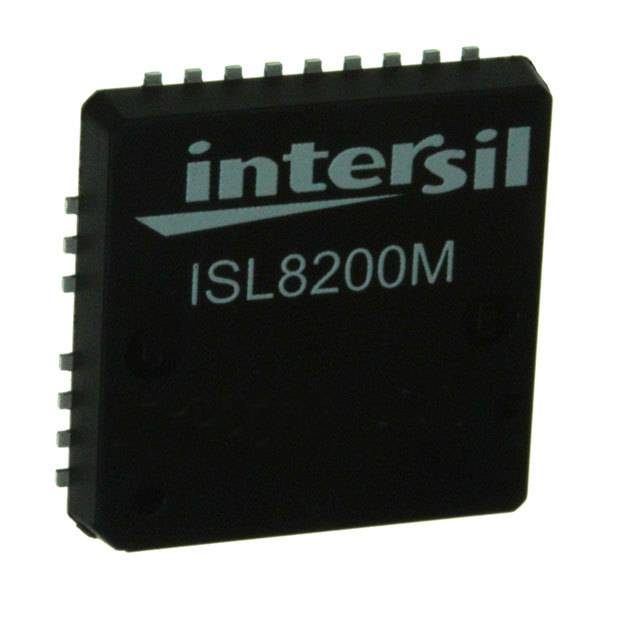
| STMicroelectronics STM32F103C8T6 | STMicro | Cortex-M3 Dashboard Supervisor. The critical hardware sentinel that mandates strict power-up sequencing. It guarantees the eMMC voltage rails are perfectly stabilized before read/write operations commence. | Check Stock → |
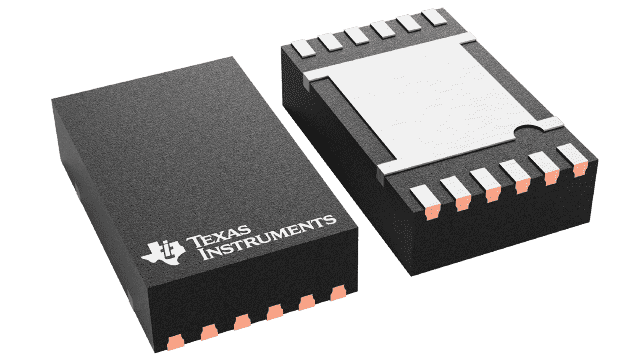
| TI TPS54360DDAR | TI | Automotive High-Voltage Step-Down Regulator. eMMCs demand utterly clean VCC inputs. This regulator violently suppresses 12V/24V battery spikes, offering a pristine, ripple-free intermediate voltage plane for the silicon logic. | Check Stock → |
| TI PCA9306DCUR | TI | Bidirectional I2C Level Shifter. Serves as the indestructible bridge between legacy 5V vehicle sensor networks (like door and tire monitors) and the modern, ultra-sensitive 1.8V domain of the infotainment logic board. | Check Stock → |
| Micron MT25QL512ABB8E12-0SIT | Micron | 512Mb SPI NOR Flash. The ultimate failsafe. While the Samsung eMMC stores the heavy OS, this NOR holds the unbreakable, hardened bootloader that instantly awakens the dashboard the millisecond the driver opens the door. |
Table 4: The 5-Model Authorized Verification Matrix. True supply chain resilience mandates securing the entire block-diagram array simultaneously. All parts are maintained with extreme authentication rigor via icallin networks.
7. Frequently Asked Questions (Executive QA)
Q1: How can icallin guarantee the authenticity of the KLM8G1GEUF-B04Q057 when the authorized market is completely depleted and wait times approach 52 weeks? A1: We never blindly trust supply sources, irrespective of long-standing relationships or seemingly perfect documentation. Every single BGA entry procured off-franchise is forcefully quarantined in our SAE AS6171-compliant laboratory. We employ destructive chemical decapsulation to match the die topologies against standard factory blueprints and 3D X-Ray tomography to detect any hidden wire bond fatigue or microscopic substrate anomalies. We deliver mathematical, empirical, metallurgical data—not verbal assurances.
Q2: What is the specific thermal and software hazard if a consumer-grade eMMC is used interchangeably instead of this AEC-Q100 module to save the line? A2: Consumer eMMCs are typically rated only up to a maximum 70°C ceiling. In an automotive dashboard baking under a summer windshield, internal ambient temperatures trivially exceed 85°C. At these extremes, consumer silicon logic gates suffer massive threshold voltage shifts. This causes extreme electron leakage from the floating gates (bit-rot), completely corrupting the filesystem over time and "bricking" the entire infotainment console permanently, leading to inevitable mass vehicle recalls.
Q3: Can your laboratory test the internal endurance limits and bad-block history of the NAND blocks to verify they aren't reclaimed chips? A3: While we execute full external electrical and pin-continuity analysis, internal block endurance history cannot always be perfectly read without risking firmware triggering. Therefore, endurance is verified preemptively by strict lot traceability codes back to original factory fabrication, combined with Decapsulation. Decap ensures we are examining pristine, un-aged silicon based directly on the date code correlation parameters, completely preventing the ingestion of salvaged, pre-exhausted scrap chips re-balled to look new.
Q4: How do you manage the Moisture Sensitivity Levels (MSL) during expedited emergency global transport where ambient humidity is entirely uncontrolled? A4: Our labs possess massive industrial environmental processing chambers. Regardless of transit conditions, we routinely conduct J-STD-033 mandated high-heat baking loops prior to sealing to completely extract any absorbed molecular moisture from the plastic bodies. Following this baseline reset, the reels are aggressively vacuum-sealed inside military-grade electrostatic discharge (ESD) and Moisture Barrier Bags (MBB), stuffed with fresh desiccant clay, and sealed with ultra-sensitive Humidity Indicator Cards (HIC) immediately before handover to the courier.
Q5: Can icallin source end-of-life (EOL) or Obsolete (OBS) Samsung memory products in addition to high-allocation active ones? A5: Yes, absolutely. Our proprietary artificial intelligence allocation radars monitor the global buffer stocks of heavy industrial, aerospace, and medical OEMs continuously. Frequently, when an archaic memory module hits its deep EOL phase, massive quantities are stubbornly locked away in corporate vaults across Asia or Europe. We actively negotiate the liberation of these dormant assets, scrub them entirely through our deep-dive lab architecture, and feed them securely back into active, desperate supply chains.
Q6: What is the standard operational procedure to initiate a critical RFQ inquiry for a halted automotive production line facing immanent penalties? A6: Simply hit the immediate Submit RFQ portal on our platform or immediately contact our dedicated global crisis management triage team. Provide your exact Manufacturer Part Number, your target quantity, your drop-dead delivery date, and any specific date-code restrictions. Our allocation radars deploy instantly to identify hidden physical stock pipelines worldwide.
8. Conclusion: The Ultimate Defense Against Allocation Paralyzation
The global supply channel for complex, multilayer memory modules like the Samsung KLM8G1GEUF-B04Q057 handles millions of components flawlessly every week during times of plenty. But when a global pandemic, a fab fire, or a sudden silicon shortage triggers deep allocation, the standard matrix fractures immediately.
Line-down scenarios test the true perimeter of a manufacturer's logistics agility and test the absolute limit of their procurement division’s resourcefulness.
You cannot fix an acute, multimillion-dollar shortage with polite phone calls begging a manufacturer for expedited lead times. When the factory quotes 52 weeks, the only way forward is to bypass the line entirely.
icallin.com is not a passive trading firm; we are specifically designed as the heavy-infantry response for these exact, high-stakes scenarios. By merging high-velocity global inventory intelligence with terrifyingly strict laboratory authentication protocols (AS6171), we strip the terrifying risk entirely out of the independent market. We don't guess, we test.
When your autonomous assembly robotic lines stall, when the dealer network goes dark, and when millions of euros in damages start to tick exponentially by the hour, do not trust luck, and never trust grey market labels.
Trust the electron microscope. Trust the structural X-Ray mapping. Trust the fuming decapsulation acid.
Trust icallin.com to deliver.
Related Internal Resources
- KLM8G1GEUF-B04Q057 — Product Detail
- Samsung Semiconductor Portfolio
- Memory & Memory Controllers Category
- Submit RFQ for Allocated Parts
- ICAllIn Hot Products Radar
📧 Submit an RFQ for KLM8G1GEUF-B04Q057 →
*Klaus·Fischer is an elite Independent Semiconductor Sourcing Specialist and Quality Assurance Architect at icallin.com, specializing in high-stress automotive shortage mitigation, SAE AS6171 counterfeit evasion, and high-frequency RF/DSP component procurement. With extensive experience deployed alongside German automotive Tier 1 manufacturers, he engineers supply solutions when standard distribution chains fracture.


Top Recommended part