

Bare PCB vs PCBA: Checks Before the Assembly Handoff
Bare PCB vs PCBA: What to Check Before Assembly
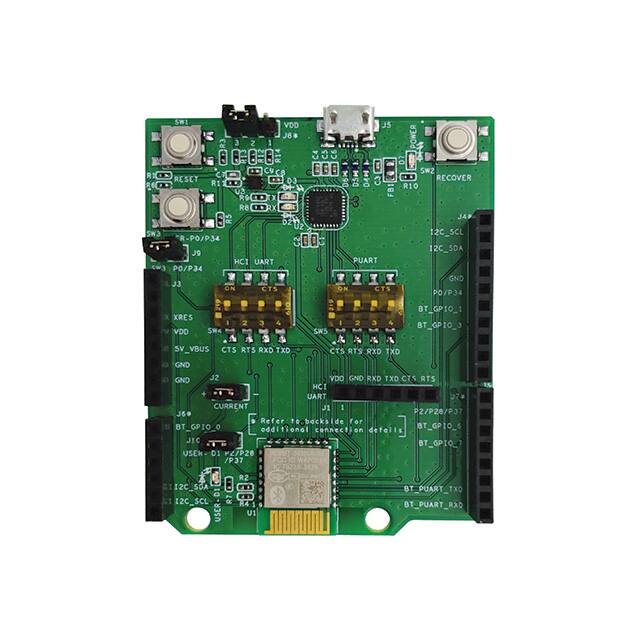
A bare PCB is a fabricated circuit board awaiting component assembly. Its intended conductors and board features already exist; adding components produces a printed circuit board assembly, or PCBA. Before releasing bare boards to assembly, check three things: the physical revision, the manufacturing records, and the scope of completed inspection and testing. A board that passes electrical testing can still have an assembly problem.
The next operation commits components and labor to the board. A documented handoff can expose revision mismatches while the boards are still easy to set aside.
Identify the Board You Are Actually Receiving
“Bare” describes the absence of assembled components, not the absence of circuit artwork. A fabricated bare PCB can have patterned copper, drilled and plated features, solder mask, markings, and a specified pad finish. The exact construction depends on the drawing.
An unetched copper-clad laminate sheet is starting material, not the same deliverable. A perfboard is a general prototyping format whose connections are typically completed during construction. Calling all three “blank boards” makes a purchase description ambiguous.
Use the board identifier and revision as the primary receiving reference. Then match the outline, hole pattern, layer construction, and finish to the released documentation. A familiar green appearance says little about whether the correct job has arrived.
Separate Fabrication Data from Assembly Instructions
Fabrication data describes the board; assembly instructions describe the components and how they are fitted. A common fabrication package includes copper and coating artwork, drill information, an outline, and drawing notes. Component positions, orientations, and the bill of materials serve the later assembly task. The KiCad PCB Editor documentation distinguishes its manufacturing plots and drill outputs from component-placement files used for assembly equipment.
The following is a practical handoff record, not a universal file-format requirement. Agree the accepted package with the receiving manufacturer.
| Handoff item | What the reviewer should match |
|---|---|
| Board identity | Drawing revision, physical marking, purchase record, and lot reference |
| Fabrication package | Released artwork, drill data, outline, stackup, and construction notes |
| Electrical test record | Board revision, test-data identity, agreed test scope, and reported result |
| Assembly package | Approved component list, placement data, assembly drawing, and do-not-populate instructions |
Assign an owner to unresolved items. “Probably the same board” is not a useful release decision when one archive contains several revisions.
Understand What Bare-Board Electrical Testing Proves
Continuity testing checks intended conductive connections; isolation testing checks separation between networks that should remain electrically distinct. The selected test method, parameters, source data, and coverage define what a result means. Agree these items rather than assuming every test report represents the same checks.
The public scope of IPC-9252B, Requirements for Electrical Testing of Unpopulated Printed Boards, explicitly separates network verification from other customer requirements. Electrical testing does not establish every physical characteristic or prove that the board can be assembled. Dimensions, solder-mask registration, and other physical features require appropriate additional checks.
Nor is bare-board electrical testing a functional test of the future product. It cannot demonstrate that an unmounted controller will boot or that an amplifier will meet its gain target. Preserve that distinction when naming reports and approving the next manufacturing stage.

Figure 1: Electrical testing is one input to assembly release; document identity and physical acceptance remain separate checks.
Worked Handoff: A Correct Board with the Wrong Assembly Archive
Consider an illustrative sensor-board job, not an icallin production record. The drawing and delivered boards carry revision C. The bare-board test report also identifies revision C. However, the assembly folder is still revision B, where a connector used a different footprint and orientation.
An electrical pass on revision C does not reconcile that disagreement. Releasing the folder unchanged would ask the assembler to interpret two different designs.
Use a three-part review. First, compare the connector location and footprint in the released board data with the physical board. Second, obtain the approved revision-C component list and placement instructions from the design owner. Third, compare the corrected assembly drawing against those files before releasing the lot.
Keep the original report linked to the boards; do not rename it to match a folder. Record what changed, who approved the correction, and which archive now controls assembly. The result is a resolved identity chain, not an invented requirement to repeat every manufacturing test.
For a different discrepancy, the next action changes. A damaged pad calls for physical disposition. An unexplained electrical failure calls for review of test evidence. A missing drawing calls for document clarification. Each issue needs its own closure.
Frequently Asked Questions
Is a bare PCB an unetched copper sheet?
Usually not in a fabrication order. Specify a finished, unpopulated circuit board when you want patterned circuitry ready for assembly. Use the appropriate laminate description when ordering raw copper-clad stock.
Can an electrical pass replace incoming inspection?
No. Read the test scope and compare it with the drawing's acceptance requirements. Electrical-network verification and physical inspection answer different questions; neither automatically covers the other.
Release the Handoff, Not Just the Board
Assembly should receive one coherent package: identified boards, applicable inspection and test records, approved assembly instructions, and closed discrepancies. That gives the next team a clear starting point without asking it to infer which revision or acceptance rule was intended.
Need Help With PCB Manufacturing or PCBA Assembly?
Share your PCB manufacturing or PCBA assembly requirements with icallin through our dedicated quotation page.