Part number

A practical PCB market outlook for procurement teams facing higher prices, shorter quote validity, allocation risk and AI-driven material demand.

PCB suppliers are expanding for AI demand, but 2027 may expose the gap between announced capacity, qualified capacity and real pricing power.

PCB buyers are facing shorter quotes, material confirmation delays and supplier priority rules as AI demand pushes the market toward allocation.

PCB buyers keep watching board quotes, but copper foil, glass cloth, CCL and PPE resin now explain why prices are moving before orders reach fabrication.
PCB prices are rising as AI servers, copper foil, PPE resin and CCL shortages collide. Here is what buyers should expect next." author: "Rebecca·Cohen

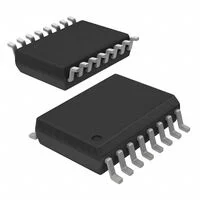
AD8221ARMZ-R7 looks like a tiny MSOP instrumentation amp, but sensor demand, 22-week lead-time signals, and exact-suffix risk can turn it into a BOM bottleneck.

Still treating 5CEFA9F23I7N as a routine FPGA buy? Cyclone V lead-time signals, 2045 support, and A9/F23 lock-in can turn one quote into line-down risk.

ICM-42688-P is hot again in FPV, drone, and sourcing searches. See datasheet specs, reliability debates, clone risks, and stock checks.

TDA21490 demand is tied to AI server VRM power density. Learn why 90A DrMOS availability, layout risk, and alternatives matter for buyers.

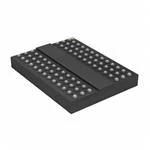
AI server memory demand is squeezing legacy DDR3L supply. See why MT41K256M16TW-107:P buyers should validate stock, suffixes, and alternatives.

The artificial intelligence hardware landscape has reached an unprecedented inflection point.

For decades, the financial architecture of enterprise data centers was remarkably predictable.

For decades, Wall Street analysts and institutional investors have treated the semiconductor memory sector—specifically Dynamic Random Access Memory (DRAM) and NAND Flash—as a textbook example of a highly cyclical commodity market.

If you read the mainstream financial press over the past twelve months, a very simple, compelling narrative has taken hold: *High Bandwidth Memory (HBM) is consuming the semiconductor industry.* The prevailing theory posits that because SK Hynix, Samsung, and Micron are desperately pivoting their cleanrooms to manufacture HBM for AI GPUs, they have structurally abandoned traditional Dynamic Random Access Memory (DRAM) and NAND Flash production.

In the high-stakes geopolitical and financial theater of the artificial intelligence boom, much of the public's attention is focused on the fabless chip designers (like Nvidia and AMD) and the sovereign foundries that print their logic (like TSMC).

When we evaluate the raw processing power of modern artificial intelligence accelerators, the numbers are staggering.

The semiconductor industry is currently locked in an unprecedented arms race. While High Bandwidth Memory 3E (HBM3E) is currently the gold standard powering the world’s most advanced AI accelerators—such as Nvidia's Blackwell architecture—the engineering focus of the "Big Three" memory makers has already violently shifted toward the horizon of 2026.

For decades, the global memory market has operated on a rigid, highly standardized business model: memory makers produce generic, off-the-shelf DRAM chips according to strict JEDEC specifications, and system architects buy those chips to plug into their motherboards.

When analyzing the High Bandwidth Memory (HBM) market, industry observers traditionally focus on the DRAM manufacturers: SK Hynix, Samsung Memory, and Micron.

To grasp the scale of the artificial intelligence revolution, one must abandon traditional metrics of computing speed and embrace the absolute extreme.

When discussing the hardware requirements of the artificial intelligence boom, the spotlight almost exclusively shines on High Bandwidth Memory (HBM)

If you observe the evolution of artificial intelligence hardware over the past three years, the narrative has been overwhelmingly dominated by a single, ex

If one were to judge the state of the semiconductor industry purely by the headlines of the past three years, they would assume the Central Processing Unit

In traditional consumer electronics, hardware failure is treated as an inevitable, manageable annoyance.

The cadence of the artificial intelligence hardware industry is relentless.

For procurement professionals, supply chain managers, and hardware enthusiasts entering the semiconductor space, the terminology surrounding memory and sto

The global artificial intelligence boom has created an insatiable demand for compute power.

For decades, the procurement of semiconductor memory was a cyclical, relatively straightforward exercise governed by the brutal laws of supply and demand.

The reality of the current AI hardware market is stark: High Bandwidth Memory (HBM) is functionally sold out.

Spot Market Trap Avoidance: Preventing Gray Market Refurbishment Ri..." meta_description: "As we have established in our previous Deep-Dive into Long-Term Agreements (LTAs), the core of the AI revolution—the High Bandwidth Memory (HBM) bonded ...

TI Price Increase April 2026: Up to 85% Hike on Analog ICs — BOM Impact Guide
We help buyers reduce risk, save time, and secure available stock.
Fast quote for global buyers