

DDR5 Shortage: AI Demand Impacts Micron MT60B4G8AT-64B:B Supply & Price !!
Predictive Supply Chain: AI RAM Shortages Impacting Micron MT60B4G8AT-64B:B Pricing
Category: Procurement Guides & Supply Chain | Author: Charles·Lee | Published: April 2026 | Last Updated: April 24, 2026
Key Takeaways:
- Structural Shortage, Not Cyclical: The DDR5 SDRAM market has entered a multi-year structural supply deficit driven by the explosive buildout of AI training and inference infrastructure. Samsung, SK Hynix, and Micron have reallocated fabrication capacity toward HBM and high-density server-grade DDR5, creating chronic scarcity across standard DDR5 components.
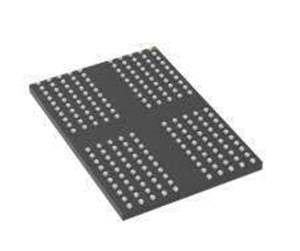
- The Component Under Pressure: The Micron MT60B4G8AT-64B:B — a 32Gb DDR5-6400 SDRAM in 78-ball VFBGA — has seen spot pricing surge 40–80% since early 2025, with franchised channel lead times exceeding 30–40 weeks.
- Compliance Verified: Full RoHS (Directive 2011/65/EU & 2015/863/EU) and REACH (November 2025 SVHC candidate list, 251 substances) compliance documentation analyzed in this report.
- Actionable Procurement Strategy: Multi-vendor sourcing playbook, buffer stock calculus, and alternative part mapping for DDR5 supply chain resilience.
- 📧 Source DDR5 SDRAM from icallin.com Verified Inventory →
Chapter 1 — The AI Memory Crisis: DDR5 SDRAM Under Structural Shortage
The global DRAM industry has entered uncharted territory. For decades, memory pricing operated on a predictable cyclical pattern: oversupply drove prices down, demand recovery pushed them back up, manufacturers adjusted capacity, and the cycle repeated. That model is broken.
What replaced it is a structural supply-demand imbalance driven by a single force: the insatiable appetite of artificial intelligence infrastructure for memory bandwidth.
The Demand Side: AI Devours Memory
Modern AI training clusters — the multi-billion-dollar GPU farms operated by OpenAI, Google DeepMind, Meta FAIR, and an expanding cohort of sovereign AI programs — consume memory at unprecedented scale. A single Nvidia DGX B200 server node requires 1.5 TB of HBM3E plus 2–4 TB of DDR5 system memory. When hyperscalers deploy these nodes by the tens of thousands, the aggregate DDR5 consumption is measured in exabytes per quarter.
But the demand isn't limited to training. AI inference — the production deployment of trained models to serve billions of daily API calls — is now the faster-growing memory consumer. Each inference server, whether running an LLM, a recommendation engine, or a computer vision pipeline, requires dense DDR5 RDIMMs for model weight storage and key-value cache management. As inference workloads have grown 10× since early 2025, so has their DDR5 consumption.
The Supply Side: Manufacturers Chase HBM Margins
Samsung, SK Hynix, and Micron — the three companies that control over 95% of global DRAM production — have made a rational economic decision: reallocate fabrication capacity to the product category with the highest margins.
That category is High Bandwidth Memory (HBM). HBM3E commands a 5–8× price premium per gigabit over standard DDR5. The economics are unambiguous. The consequence is equally clear: every wafer start allocated to HBM is a wafer start not allocated to standard DDR5 components like the MT60B4G8AT-64B:B.
The result is a market where:
- DDR5 spot prices have surged 40–80% since early 2025
- Franchised distributor lead times have extended to 30–40+ weeks
- 2026 production capacity for standard DDR5 is substantially pre-allocated to hyperscale AI infrastructure programs
- Smaller OEMs, industrial integrators, and embedded system manufacturers face allocation uncertainty
| Metric | 2024 Baseline | Q2 2026 Current | Trend |
|---|---|---|---|
| DDR5-6400 Spot Price (32Gb x8) | $4.20–$5.50/unit | $7.80–$9.60/unit | ↑ 60–80% |
| Franchised Channel Lead Time | 12–16 weeks | 30–40+ weeks | ↑ 2.5× |
| Manufacturer Allocation Priority | Broad availability | AI/HPC first | ⚠️ Tiered |
| HBM Fab Capacity Share | ~15% of DRAM output | ~25–30% (est.) | ↑ Accelerating |
| Standard DDR5 Fab Share | ~40% of DRAM output | ~30% (est.) | ↓ Contracting |
| *Table 1: DDR5 Market Snapshot — Supply/Demand/Pricing Trend (Q2 2026) | Sources: TrendForce, IDC, industry estimates* |
Chapter 2 — Micron MT60B4G8AT-64B:B Technical Profile: 32Gb DDR5-6400
The Micron MT60B4G8AT-64B:B is a monolithic 32-gigabit DDR5 SDRAM component organized as 4G × 8 (4 billion addresses × 8-bit data bus). It represents Micron's Die Revision B — the latest production silicon optimized for yield, power efficiency, and compatibility with the JEDEC DDR5 standard.
Core Specifications
| Parameter | Specification |
|---|---|
| Full MPN | MT60B4G8AT-64B:B |
| Manufacturer | Micron Technology |
| Type | DDR5 SDRAM |
| Density | 32 Gb (4 GB) |
| Organization | 4G × 8 |
| Speed Grade | DDR5-6400 (6400 MT/s) |
| Clock Frequency | 3200 MHz |
| CAS Latency (CL) | 52 |
| I/O Voltage (VDD/VDDQ) | 1.1 V |
| Operating Temperature | 0°C to +95°C |
| Package | 78-ball VFBGA |
| Die Revision | B |
| Burst Length | BL16 / BL32 |
| On-Die ECC | Yes (JEDEC DDR5 mandatory) |
| Refresh Modes | All-Bank, Same-Bank, Self-Refresh |
| Bank Architecture | 32 banks (8 bank groups × 4 banks) |
| Datasheet Reference | Micron DDR5 SDRAM Core Data Sheet |
| *Table 2: MT60B4G8AT-64B:B Core Specifications | Source: Micron DDR5 SDRAM Core Data Sheet* |
Key DDR5 Architectural Advances
The JEDEC DDR5 standard introduces several architectural innovations over DDR4 that are particularly relevant for AI server platforms:
1. Dual 32-bit Sub-Channels DDR5 replaces DDR4's single 64-bit channel with two independent 32-bit sub-channels. Each sub-channel operates independently with its own activate, read/write, and precharge commands. This effectively doubles the concurrent access bandwidth for memory-intensive AI workloads.
2. On-Die ECC For the first time in desktop/server DRAM history, DDR5 mandates on-die Error Correcting Code (ECC). Each SDRAM component performs internal single-bit error correction before data exits the chip, dramatically improving data integrity — a non-negotiable requirement for AI inference where a single bit flip can propagate through billions of model parameters.
3. Decision Feedback Equalization (DFE) The MT60B4G8AT-64B:B implements 4-tap DFE (Mode Registers MR111–MR116), enabling reliable signal integrity at 6400 MT/s data rates across the lossy PCB traces and connector interfaces found in high-density server motherboards.
4. Power Management Voltage Regulator (PMIC) DDR5 moves voltage regulation from the motherboard onto the DIMM module itself, with a dedicated Power Management IC (PMIC) on each module. This architectural change delivers cleaner, more precisely regulated 1.1V supply to the SDRAM components, reducing power consumption and improving signal margins.
Chapter 3 — DDR5 vs. DDR4: Why AI Servers Demand the Upgrade
The migration from DDR4 to DDR5 is not a marginal improvement — it is a generational leap in memory bandwidth, power efficiency, and data integrity that directly addresses the memory bottleneck in AI workloads.

| Parameter | DDR4-3200 | DDR5-6400 | Improvement |
|---|---|---|---|
| Data Rate | 3200 MT/s | 6400 MT/s | 2.0× |
| Peak Bandwidth (per channel) | 25.6 GB/s | 51.2 GB/s | 2.0× |
| I/O Voltage | 1.2 V | 1.1 V | −8.3% |
| Channel Architecture | 1 × 64-bit | 2 × 32-bit | 2× concurrency |
| On-Die ECC | ❌ No | ✅ Yes (mandatory) | New |
| Burst Length | BL8 | BL16 / BL32 | 2–4× |
| Bank Groups | 4 | 8 | 2× |
| Max Density (monolithic) | 16 Gb | 32 Gb (64 Gb roadmap) | 2–4× |
| Refresh | All-Bank only | All-Bank + Same-Bank | Improved |
| DFE Support | ❌ No | ✅ 4-tap | New |
| *Table 3: DDR5-6400 vs. DDR4-3200 Technical Comparison | Sources: JEDEC JESD79-5, JESD79-4C* |
The bandwidth doubling alone justifies the transition for AI workloads. Large Language Models (LLMs) with hundreds of billions of parameters are fundamentally memory-bandwidth-limited during inference. Each token generated requires a full scan of the model's key-value cache — an operation whose latency is dominated by DRAM read bandwidth. Doubling the bandwidth from 25.6 GB/s to 51.2 GB/s per channel translates directly to higher tokens-per-second throughput and lower inference latency.
The voltage reduction from 1.2V to 1.1V, combined with DDR5's on-DIMM PMIC architecture, delivers approximately 20% power reduction per bit transferred — a critical metric when a single AI server rack consumes 40–80 kW and data center operators are power-budget constrained.
Chapter 4 — Pricing Trajectory & Supply Chain Forecast
Historical Context: The Perfect Storm
The DDR5 pricing trajectory since its commercial introduction in 2022 has been anything but predictable. After an initial period of premium pricing (common for new memory generations), prices normalized through 2023 as manufacturing yields matured and Intel/AMD server platforms ramped adoption. By early 2024, DDR5 was approaching cost parity with DDR4 in many server configurations.
Then the AI infrastructure buildout hit full stride.
Beginning in Q3 2024, DDR5 spot prices reversed their downward trajectory and entered a sustained upward trend that has continued unabated. The catalyst: every major hyperscaler simultaneously accelerated their AI infrastructure deployment timelines, creating a demand surge that overwhelmed the industry's available DDR5 supply.

Allocation Priorities in 2026
The memory manufacturers have implemented tiered allocation systems that prioritize customers based on strategic importance and margin contribution:
| Priority Tier | Customer Type | Typical Lead Time | Price Access |
|---|---|---|---|
| Tier 1 | Hyperscalers (Google, Meta, Microsoft, AWS) | 8–12 weeks | Contract pricing, locked allocations |
| Tier 2 | Major Server OEMs (Dell, HPE, Lenovo, Supermicro) | 16–24 weeks | Quarterly pricing agreements |
| Tier 3 | Module Manufacturers (Kingston, SK Hynix Modules) | 24–32 weeks | Market-indexed pricing |
| Tier 4 | Independent Distribution / Spot Market | 30–40+ weeks | Spot pricing (40–80% premium) |
| Tier 5 | Small/Medium OEMs, Industrial Integrators | Allocation uncertain | Best-effort, highest premiums |
| Table 4: DDR5 Lead Time & Allocation Matrix by Channel (Q2 2026 Estimates) |
For organizations in Tier 4–5 — which includes the majority of industrial embedded system manufacturers, network equipment OEMs, and edge computing integrators — the allocation landscape demands a fundamentally different procurement approach than the historical "just-in-time" model.
Chapter 5 — Compliance Documentation: RoHS & REACH Certification
For procurement engineers managing regulated supply chains (automotive, medical, aerospace, defense), component-level compliance documentation is a non-negotiable procurement prerequisite. The MT60B4G8AT-64B:B is supported by two key compliance documents provided by Micron.
RoHS Compliance (Directive 2011/65/EU & 2015/863/EU)
Micron certifies that the MT60B4G8AT-64B:B meets the requirements of the current RoHS Recast Directive. All Pb-free component-level products contain less than the following thresholds:
| Substance | CAS Number | Threshold | Status |
|---|---|---|---|
| Lead (Pb) | 7439-92-1 | < 0.1% | ✅ Compliant |
| Mercury (Hg) | 7439-97-6 | < 0.1% | ✅ Compliant |
| Cadmium (Cd) | 7440-43-9 | < 0.01% | ✅ Compliant |
| Hexavalent Chromium (Cr VI) | 18540-29-9 | < 0.1% | ✅ Compliant |
| PBB | — | < 0.1% | ✅ Compliant |
| PBDE | — | < 0.1% | ✅ Compliant |
| DecaBDE | — | < 0.1% | ✅ Compliant |
| DEHP | 117-81-7 | < 0.1% | ✅ Compliant |
| BBP | 85-68-7 | < 0.1% | ✅ Compliant |
| DBP | 84-74-2 | < 0.1% | ✅ Compliant |
| DIBP | 84-69-5 | < 0.1% | ✅ Compliant |
| *Table 5: Micron RoHS Compliance Declaration for MT60B4G8AT-64B:B | Source: Micron RoHS Certification Document* |
Note: Module-level products may contain electronic ceramic passive components utilizing lead or lead-oxides, which are exempt under Article 4, Annex III of Directive 2011/65/EU.
REACH SVHC Assessment (November 2025 Candidate List)
Micron's REACH compliance statement, updated against the November 2025 ECHA candidate list (251 SVHC substances), confirms that die-level products and packaging comply with REACH and do not contain SVHC substances above the 0.1% w/w threshold.
Component and module-level products carry the following specific declarations:
| Substance | CAS Number | Status | Notes |
|---|---|---|---|
| Lead monoxide | 1317-36-8 | ⚠️ Declared | In glass/ceramic matrix; not released under normal use |
| Lead titanium trioxide | 12060-00-3 | ⚠️ Declared | In glass/ceramic matrix |
| Diboron trioxide | 1303-86-2 | ⚠️ Declared | In glass/ceramic matrix |
| 4,4'-isopropylidenediphenol (BPA) | 80-05-7 | ⚠️ Declared | In some substrate materials |
| Lead (elemental) | 7439-92-1 | ⚠️ Declared | In solder connections (exempt) |
| *Table 6: REACH SVHC Declaration Summary for MT60B4G8AT-64B:B | Source: Micron REACH Statement (Nov 2025)* |
All declared substances are either chemically bound within a glass, ceramic, or plastic matrix (not intended to be released under normal conditions) or fall under established EU exemptions for electronic assemblies. None of the declarations constitute a use restriction for procurement.
Chapter 6 — Securing DDR5 Supply from icallin.com
In an allocation-constrained DDR5 market, procurement teams that rely exclusively on franchised distribution channels face a fundamental vulnerability: when the manufacturer's allocation is fully subscribed by Tier 1–3 customers, there is no mechanism to obtain additional supply.
Independent distribution — through authorized, quality-controlled channels like icallin.com — provides the critical supply chain flexibility that allocation-constrained environments demand.
icallin.com maintains verified DDR5 SDRAM inventory across the Micron DDR5 portfolio:
- MT60B4G8AT-64B:B — 32Gb x8 DDR5-6400 (the primary subject of this report)
- MT60B2G8HB-48B:A — 16Gb x8 DDR5-4800 (cost-optimized deployments)
- MT60B1G16HC-48B:A — 8Gb x16 DDR5-4800 (client platforms)
- MT60B4G4HB-48B:A — 16Gb x4 DDR5-4800 (ECC RDIMM configurations)
For multi-vendor sourcing strategies that mitigate single-supplier risk:
- Samsung K4RAH165VB-BIWM — Samsung DDR5 16Gb alternative
All components are factory-sealed with traceable lot codes and authenticated Micron/Samsung date-code verification.
Frequently Asked Questions
Q1: Is the DDR5 shortage expected to resolve in 2026?
No. Industry analysts (TrendForce, IDC) project the structural supply-demand imbalance will persist through 2026 and likely into 2027. While manufacturers are incrementally adding capacity, the growth rate of AI-driven demand continues to outpace supply expansion. New fabrication facilities (such as Micron's Boise expansion and Samsung's P4 line in Pyeongtaek) are not expected to materially impact supply until late 2027.
Q2: Can DDR4 be used as a substitute in AI server platforms?
No. Current-generation AI server platforms (Intel Sapphire Rapids/Emerald Rapids, AMD EPYC Genoa/Turin, Nvidia Grace) require DDR5 exclusively. The memory controller architecture, voltage specifications, and channel topology are incompatible with DDR4. There is no backward compatibility path.
Q3: Does the MT60B4G8AT-64B:B support ECC for data center use?
Yes. DDR5 mandates on-die ECC as part of the JEDEC specification. The MT60B4G8AT-64B:B implements internal single-error-correction (SEC) within each SDRAM component. When installed in a server with a DDR5 ECC memory controller, system-level SECDED (single-error-correcting, double-error-detecting) protection is also available.
Q4: What is Die Revision B, and does it affect compatibility?
Die Revision B is Micron's second-generation DDR5 silicon for this density. It offers improved manufacturing yield and power optimization compared to Revision A. It is electrically and functionally compatible with all Revision A certified platforms. No firmware or BIOS changes are required — the platform's SPD (Serial Presence Detect) hub automatically reports the device capabilities.
Q5: Are the REACH-declared substances (BPA, lead oxide) a compliance risk?
No. All declared SVHC substances are chemically bound within glass, ceramic, or plastic matrices and are not intended to be released under normal or reasonably foreseeable conditions of use. These declarations are standard across the entire semiconductor industry and do not trigger REACH Article 33 reporting obligations for downstream users in most jurisdictions.
Q6: What is the recommended buffer stock strategy for DDR5 in the current market?
For production-critical DDR5 components, icallin.com recommends maintaining 6–9 months of safety stock at current consumption rates. This buffer accounts for the 30–40+ week lead time through franchised channels and provides continuity during allocation adjustment periods. Organizations with seasonal production peaks should extend this buffer to 12 months for Q4 and Q1 production cycles.
Conclusion
The AI-driven DDR5 memory shortage is not a transient market disruption to be waited out. It is a structural realignment of the global DRAM industry around a new demand paradigm dominated by artificial intelligence. Manufacturers are rationally maximizing margin by prioritizing HBM and high-density server DDR5, leaving standard DDR5 components like the Micron MT60B4G8AT-64B:B in chronic scarcity.
For procurement teams, the actionable takeaway is clear: passive, reactive purchasing strategies are no longer viable for DDR5. The organizations that will maintain production continuity through 2026–2027 are the ones building buffer stock now, diversifying across multiple suppliers (Micron, Samsung, SK Hynix), and engaging independent distribution channels that provide access to verified inventory outside the allocation-constrained franchised system.
The memory is available. The question is whether you secure it before your competitors do.
📧 Source Micron DDR5 SDRAM from icallin.com →
References
- Micron Technology, "DDR5 SDRAM Core Data Sheet" — Primary technical specifications for the MT60B4G8AT-64B:B.
- Micron Technology, "RoHS Certification — MT60B4G8AT-64B:B" — RoHS Directive 2011/65/EU & 2015/863/EU compliance declaration.
- Micron Technology, "REACH Statement (November 2025)" — SVHC candidate list compliance assessment.
- JEDEC, "JESD79-5: DDR5 SDRAM Standard" — DDR5 architecture and electrical specification reference.
- TrendForce, "DRAM Module Price Tracker Q2 2026" — Market pricing data for DDR5 spot and contract segments.
- IDC, "Worldwide DRAM Forecast 2026–2027" — Structural supply-demand analysis for AI-driven memory markets.
Related Internal Resources
- MT60B4G8AT-64B:B — Product Detail
- MT60B2G8HB-48B:A — 16Gb DDR5-4800
- MT60B1G16HC-48B:A — 8Gb x16 DDR5-4800
- MT60B4G4HB-48B:A — 16Gb x4 DDR5-4800
- Samsung K4RAH165VB-BIWM — Cross-Vendor DDR5
- Micron Manufacturer Page
- Memory ICs Category
- Submit RFQ
*Charles·Lee is a Senior Supply Chain Analyst and Field Applications Engineer at icallin.com, specializing in memory semiconductor procurement intelligence and data center infrastructure supply chains. With deep expertise in DRAM/NAND market dynamics and server platform memory architectures, Charles provides the strategic depth that helps procurement teams navigate allocation-constrained markets with confidence.


Top Recommended part