Part number
ICAllIn’s Resistor Color Code Calculator is an interactive tool for identifying resistor values based on 4-band, 5-band, and 6-band color codes. Simply select the colors, and the calculator will display the resistance in Ohms (Ω), tolerance, and power rating. Whether you are building a circuit, repairing electronics, or sorting resistors in your lab, this calculator provides an accurate and efficient way to decode resistor values.

Introduction
The Resistor Color Code Calculator is designed to instantly compute the resistance value for 4, 5, and 6-band resistors.
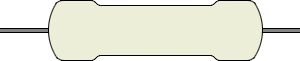
Resistors use a standardized color-coding system to indicate their resistance value, tolerance, and sometimes reliability or temperature coefficient. This is necessary because the components are often too small for printed text.
To read a resistor manually, hold it so the band closest to one end is on the left. The gap between bands is usually wider before the tolerance band (the last band on the right).
Use this table to decode the colors on your resistor:
| Color | Significant Digits | Multiplier | Tolerance | Temp. Coefficient |
|---|---|---|---|---|
| Black | 0 | 1 () | - | 250 ppm/K |
| Brown | 1 | 10 () | (F) |
This is the most common type.
Used for higher precision (1% or 2% tolerance).
High-precision resistors used in temperature-sensitive environments.
| Resistance | 4-Band Code (5% Tolerance) | 5-Band Code (1% Tolerance) |
|---|---|---|
| 1 | Brown - Black - Gold - Gold | Brown - Black - Black - Silver - Brown |
| 10 | Brown - Black - Black - Gold | Brown - Black - Black - Gold - Brown |
| 100 | Brown - Black - Brown - Gold | Brown - Black - Black - Black - Brown |
| 1 k | Brown - Black - Red - Gold | Brown - Black - Black - Brown - Brown |
| 10 k |
Resistors are manufactured in standard logarithmic values known as E-Series to verify component tolerance and reduce inventory complexity.
| 100 ppm/K |
| Red | 2 | 100 () | (G) | 50 ppm/K |
| Orange | 3 | 1k () | (W) | 15 ppm/K |
| Yellow | 4 | 10k () | (P) | 25 ppm/K |
| Green | 5 | 100k () | (D) | 20 ppm/K |
| Blue | 6 | 1M () | (C) | 10 ppm/K |
| Violet | 7 | 10M () | (B) | 5 ppm/K |
| Grey | 8 | 100M () | (L) | 1 ppm/K |
| White | 9 | 1G () | - | - |
| Gold | - | 0.1 () | (J) | - |
| Silver | - | 0.01 () | (K) | - |
| Brown - Black - Orange - Gold |
| Brown - Black - Black - Red - Brown |
| 100 k | Brown - Black - Yellow - Gold | Brown - Black - Black - Orange - Brown |
| 1 M | Brown - Black - Green - Gold | Brown - Black - Black - Yellow - Brown |
| 10 M | Brown - Black - Blue - Gold | Brown - Black - Black - Green - Brown |
Hold the resistor with the gold or silver band to the right and read the color codes from the left to the right. Select the color codes from the bands on the resistor. Read the colors from left to right. The resistance value based on the color code provided is now displayed.
A Resistor colour code or Resistor Color Code is a system for displaying information by using different colors. The earliest examples of color codes in use are for long distance communication by use of flags, as in semaphore communication.
100k ohm resistor color code- 4 band 1) Brown, Black, Yellow, Gold. 2) And tolerance considered as ==> 5% of 100K ==>5000Ω 3) Other methods: Remove the resistor from PCB then test it with a DMM in resistance mode and note down its value. It needs to be separated from pcb so as to avoid the equivalent parallel resistance from resistors in the circuit.
1k ohm resistor color code are - Brown - black - red 1 k ohm Resistors with 5 band are 1% tolerance resistors. First three bands determine the value of the resistor.
A resistor is a device that opposes the flow of electrical current. The bigger the value of a resistor the more it opposes the current flow. The value of a resistor is given in ohms and is often referred to as its 'resistance'.
3.9K Ohm 0.5W Metal Film Resistor (MFR) with ±1% Tolerance. 3.9K Ohm Resistor Color Code: Orange, White, Black, Brown, Brown.
Actual value of 100k Ohm resistor is calculated as: 1st band= Brown= 1 (1st digit) 2nd band= Black= 0 (2nd digit) 3rd band= Yellow= 4(multiplier)= 10000. 4th band= Gold= ±5% (tolerance) Therefore, 10×1000000±5% ==> 1000000Ω ==> 100KΩ
A passive electrical component with two terminals that are used for either limiting or regulating the flow of electric current in electrical circuits. The main purpose of the resistor is to reduce the current flow and to lower the voltage in any particular portion of the circuit.
The color code of 2.2 k resistor is Red-Red-Red-Gold. From the above resistor color code table, you will find that Red stands for 2 and Red for 2. The third band is Red, so it means a multiplier value of 2 (100). And the 4th band is Gold, which means the tolerance is 5%. Thus the value of 2k2 resistor is 56 · 102 = 56 · 100 = 5600 Ω. Thus The resistance value lies therefore between 5320 and 5880 Ω (5560 ± 5%).
You could read its band color and get it with the online color code calculator. For example, the 4 band 10k resistor color code is brown-black-orange-silver/gold. And the tolerance of the silver band is 10% or gold for 5% tolerance. And if it is a 5 band resistor, the 10k resistor color code will be brown-black-black-red. Meanwhile the tolerance band is separated from the other 4 bands color code. Its color could be one of several depending on the resistors tolerance.
Fill in the blanks using the first five colors. Resistors with six bands are essentially five-band resistors with an extra ring showing the temperature coefficient or dependability.
3-band resistors have a tolerance of 20% and are widely employed by amateurs or in situations where the resistance value is not crucial. Brown, black, and gold are the colors for a 3 band 1R0 (1 ) resistor. Between 1.2 and 0.8 will be the resistance value. Therefore, you don't need to enter the 4th band while using our online resistor color code calculator. Because there is not a tolerance ring for 20% resistors. However, the 3 band resistor will be calculated through the 4 bands color code rule (digit, digit, multiplier).Therefore, the 4 band resitor color code calculator is 3 band resistor color code calculator too. For example: 3 band resistor color code of a 10K resistor with 20% tolerance is Brown, black, orange. Resistor color code 3 band for 220 ohm resistors with 20% tolerance is Red, red, brown.
There are a few guidelines to follow: 1.) The color bands on certain resistors are packed together and/or near to one end. Hold the resistor to the left of the tightly clustered bars and read the resistor from left to right. 2.) The process for reading 5% and 10% resistors is straightforward: hold the resistor with the silver or gold band to the right and read the resistance from left to right. 3.) The first band can't be silver or gold, so if you have one, you'll know where to start right away. As fundamental resistor values vary from 0.1 Ohm to 10 Mohms, the third color for 4-band resistors will be blue (106) or less, while the fourth color for 5-band resistors will be green (105) or less.
For a 3-band resistor color codes, the first two bands always denote the first two digits of the resistance value while the third band represents the multiplier. In the example we have, the bands are brown, black and brown. The first band is the brown band closest to the edge.

ICAllIn’s Ohm’s Law Calculator helps engineers and students quickly calculate resistance, current, voltage, and power in an electrical circuit. Simply enter any two known values, and the calculator will instantly compute the remaining parameters. This fast and easy-to-use online tool illustrates the fundamental relationship between voltage, current, and resistance, making it essential for circuit design, troubleshooting, and electronics learning.

The Op Amp Voltage and Gain Calculator is an easy-to-use tool for analyzing operational amplifier circuits. It calculates the output voltage, inverting gain, and non-inverting gain based on the input parameters. Simply enter the values of V1, V2, Vp, Vn, and the resistor values R1, R2, R3, and R4, and the calculator will instantly provide accurate results. This tool is suitable for both professional engineers and beginners learning op amp circuit design.

The Inverting Op Amp Resistor Calculator is a practical tool for analyzing operational amplifier inverting circuits. By entering parameters such as the desired gain, output voltage (Vout), R1 resistance, and the input voltages V1, V2, Vp, and Vn, the calculator automatically determines the required resistor values (R2, R3, and R4). Simply input the values and click “Calculate” to quickly design and verify inverting op amp configurations.