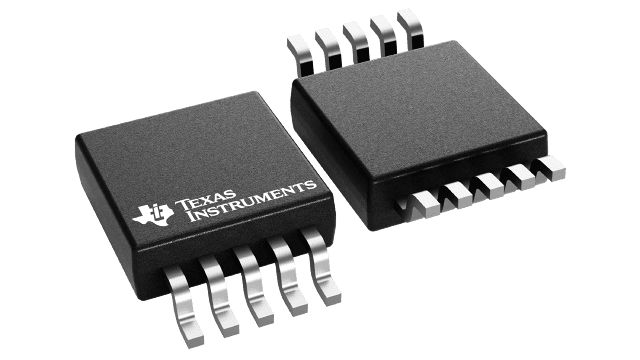


NXP TJA1051 CAN Transceiver Q2 2026: Pricing Trends & Supply Analysis
The NXP CAN Transceiver Squeeze: Why TJA1051T/3/1 Prices Are Trending Upward in Q2 2026
Category: Market Trends & Lead Times | Author: Charles·Lee | Published: April 2026 | Last Updated: April 16, 2026
Key Takeaways:
- The Big Squeeze: Effective April 1, 2026, NXP Semiconductors implemented a broad price adjustment across its automotive and industrial product lines, signaling the end of the post-pandemic semiconductor price deflation.
- TJA1050 End-of-Life: The legacy TJA1050 has been officially moved to "Not Recommended for New Designs" (NRND) and is effectively discontinued, forcing a massive market migration to the modern TJA1051 generation.
- Structurally High Demand: Despite the transition to centralized Zonal E/E architectures, CAN FD nodes per vehicle are steadily increasing, keeping pressure on NXP's 8-inch mixed-signal fabrication capacity.
- The VIO Advantage: The TJA1051T/3/1 variant continues to dominate market demand thanks to its dedicated $V_{IO}$ pin, allowing direct interfacing with 3.3V microcontrollers without external level shifters.
- Strategic Sourcing Window: Unallocated stock of the TJA1051T/3/1 is vanishing rapidly as Tier-1 automotive suppliers engage in defensive procurement. Securing verified inventory in Q2 2026 is critical to prevent Q3 manufacturing line halts.
- Immediate Action Required: 📧 Submit an RFQ for TJA1051T/3/1 →
The Macro View — NXP's April 2026 Price Adjustment
For automotive hardware engineers, supply chain managers, and procurement directors navigating the tumultuous semiconductor landscape of 2026, the first quarter delivered a sobering reality check. The brief period of semiconductor price stabilization witnessed throughout 2025 has abruptly concluded. On April 1, 2026, NXP Semiconductors enacted a comprehensive pricing adjustment that rippled across its automotive, industrial, and Internet of Things (IoT) integrated circuit portfolios.
This is not an isolated event; it represents a structural realignment within the industry. As original equipment manufacturers (OEMs) of electric vehicles (EVs) push hard for greater integration, advanced driver-assistance systems (ADAS), and fully realized software-defined vehicles (SDVs), the foundational components that tie these complex systems together—specifically Controller Area Network (CAN) transceivers like the TJA1051T/3/1—are experiencing unprecedented pricing pressure.
What Changed on April 1st: Automotive, Industrial & IoT Lines
The April 1st broad-based price increase from NXP reflects deeper macroeconomic and localized manufacturing pressures. NXP's forward guidance for Q1 2026, which projected a revenue midpoint of approximately $3.15 billion with the automotive segment tracking a mid-single-digit percentage increase year-over-year, underscored the robust baseline demand driving these adjustments.
The price adjustments are not equally distributed. While leading-edge digital nodes (e.g., 5nm or 3nm logic processors used in central compute modules) follow their own complex pricing curves dictated by monumental capital expenditures, the mature trailing-edge nodes (primarily 8-inch or 200mm wafers) that produce robust analog and mixed-signal devices are caught in a classic supply-side trap.
8-Inch Wafer Cost Pressure: Why Analog/Mixed-Signal ICs Can't Escape Inflation
The TJA1051T/3/1 is fundamentally a mixed-signal device. It must handle harsh analog environments—surviving ±58V continuous bus faults and massive electrostatic discharge (ESD) events up to ±8kV—while simultaneously converting those severe analog conditions into clean, deterministic digital logic levels for the host microcontroller.
Manufacturing such rugged devices requires specialized Bipolar-CMOS-DMOS (BCD) semiconductor processes running predominantly on 8-inch (200mm) wafer fabrication lines. Over the last three years, the semiconductor industry has heavily underinvested in 8-inch capacity, pivoting capital almost entirely toward 12-inch (300mm) mega-fabs. Consequently, the operational costs for remaining 8-inch fabs—encompassing higher localized energy costs, raw silicon wafer inflation, and the ongoing amortization of specialty tooling—have skyrocketed.
NXP, like its peers Texas Instruments and Infineon, must pass these structural cost escalations downstream to Tier-1 module manufacturers and ultimately to the automakers.
Table 1: NXP Q4 2025 vs Q1 2026 Revenue Guidance by Segment (Estimated Milestones)
| Financial Metric | Q4 2025 Actuals | Q1 2026 Midpoint Guidance | YoY Growth (Estimated) | Market Implication |
|---|---|---|---|---|
| Total Revenue | $3.42 Billion | $3.15 Billion | Flat / Slight Contraction | Seasonal dip, but baseline remains significantly elevated historically. |
| Automotive Revenue | $1.89 Billion | ~$1.81 Billion | +5.2% (Mid-Single-Digit) | Automotive continues to disproportionately carry NXP's growth, keeping pressure on specific ICs. |
| Industrial & IoT | $662 Million | ~$600 Million | Flat | Stabilizing demand in factory automation offset by high inventory. |
| Mobile | $406 Million | ~$350 Million | Decrease | Soft consumer electronics demand provides no relief for automotive 8-inch capacity. |
| Comm. Infra & Other | $466 Million | ~$390 Million | Flat | Baseline telecom infrastructure spending sustained. |
Table 1: Approximation based on NXP earnings guidance releases, depicting the sustained strength of the automotive revenue vector, which inherently drives demand allocation prioritization for components like the TJA1051.
TJA1050 End-of-Life — The Migration Bottleneck
Compounding the macro-level pricing adjustment is a highly specific, localized supply chain disruption: the death of the TJA1050.
For over a decade, the NXP TJA1050 served as the quintessential, ubiquitous high-speed CAN transceiver. It populated millions of printed circuit boards (PCBs) across automotive body control modules (BCMs), industrial programmable logic controllers (PLCs), and aftermarket diagnostic tools. However, the semiconductor lifecycle spares no integrated circuit.
Official EOL Timeline and PCN History
NXP officially transitioned the TJA1050 to "Not Recommended for New Designs" (NRND) status, executing the standard Product Change Notification (PCN) and End-of-Life (EOL) protocols. This classification signifies that while some limited residual wafers may be processed to fulfill final Last-Time-Buy (LTB) contracts, general distribution allocation is severed.
Once a component hits NRND status, the grey market response is immediate. Unauthorized brokers drastically inflate the spot price of the remaining TJA1050 inventory, preying on companies whose engineering teams failed to redesign their boards in time. However, paying exorbitant premiums for a discontinued part is ultimately a futile strategy; every manufacturer must fundamentally confront the migration imperative.
Why Every TJA1050 Socket Must Convert to TJA1051: Pin & Feature Comparison
NXP engineered the TJA1051 generation as the explicit, direct-replacement migration path for the defunct TJA1050. The TJA1051 represents the third generation of high-speed CAN transceivers from NXP, delivering drastically superior electromagnetic compatibility (EMC) and a significantly lower quiescent current profile.
Crucially, the base variant, the TJA1051T, is essentially pin-for-pin compatible with the SOIC-8 footprint of the TJA1050 in standard applications. However, the migration is not merely about finding a footprint match; it is about leveraging the advanced feature set of the newer silicon to vastly improve the resilience of the local CAN network.
The TJA1051 eliminates the major architectural flaw of the TJA1050: its behavior when unpowered. When the supply voltage ($V_{CC}$) to a TJA1050 was removed, the transceiver could behave unpredictably, sometimes drawing excessive leakage current from the CAN bus lines (CANH and CANL) or disrupting active communication between other nodes. The TJA1051 introduces absolute passive behavior; when powered down, it effectively vanishes, presenting near-zero load to the active bus.
Furthermore, the TJA1051 is designed specifically for CAN FD (Flexible Data-rate). While the TJA1050 was strictly bound to the 1 Mbit/s limit of classical ISO 11898 standard, the newer silicon architecture of the TJA1051 supports clean, deterministic signal integrity at data rates up to 5 Mbit/s.
Table 2: TJA1050 vs TJA1051T/3 Full Parameter Comparison
| Parameter | Legacy TJA1050 (EOL) | Modern TJA1051T/3 | Migration Impact & Engineering Advantage |
|---|---|---|---|
| Max Data Rate | 1 Mbit/s (Classic CAN) | 5 Mbit/s (CAN FD) | Absolutely mandatory requirement for all modern automotive networks. |
| Standby / Passive Behavior | Poor; can load the bus if unpowered. | Ideal Passive; zero bus load when unpowered. | Prevents network collapse if a single ECU loses local power. |
| TXD Dominant Time-Out | Not Integrated | Integrated ($t_{to(dom)TXD}$) | Prevents a complete bus lockup if the MCU crashes while holding TXD Low. |
| I/O Logic Interface Voltage | 5V Fixed | 2.8V to 5.5V via dedicated $V_{IO}$ pin | Eliminates the need for discrete level-shifting components when interfacing with 3.3V microcontrollers. |
| Bus Pin Fault Tolerance | -27V to +40V | -58V to +58V | Massively improved resilience against brutal automotive transients and battery short-circuits. |
| ESD Protection (CAN pins) | ±4kV (HBM) | ±8kV (IEC 61000-4-2) | Superior robustness against localized static discharge during vehicle assembly and maintenance. |
| Electromagnetic Emission (EME) | Standard | Extremely Low | Improved internal shaping prevents RF feedback, simplifying PCB layout and reducing filtering component costs. |
Table 2: Comparison illustrating why the migration to the TJA1051 is not just an obsolescence workaround, but a massive technical upgrade in ruggedness and network speed capability.
Understanding the TJA1051T/3/1 — A Technical Deep-Dive
When engineers evaluate the TJA1051 family, they frequently encounter confusion surrounding the specific trailing nomenclature. Understanding these suffix variations is the key to optimizing BOM cost and accelerating the hardware design cycle.
Three Variants Explained: TJA1051T vs /3 vs /E
The primary differentiator across the TJA1051 family lies in the functionality assigned to Pin 5. In the older TJA1050, Pin 5 was frequently left unconnected or served an obscure reference voltage function depending on the specific application hardware. NXP ingeniously repurposed this pin to spawn three distinct product variants, tailoring the transceiver to specific system architectures.
- TJA1051T (The Drop-In Replacement): In this variant, Pin 5 is largely ignored internally, and the I/O logic levels for the TXD (Transmit Data) and RXD (Receive Data) pins are internally tied to the main $V_{CC}$ supply (which must be 5V). This is the direct drop-in replacement for legacy 5V systems.
- TJA1051T/3 (The Modern Standard): In this variant, Pin 5 becomes the $V_{IO}$ supply pin. This is the most popular variant in the market today (represented by the specific TJA1051T/3/1 orderable part number).
- TJA1051T/E (The Power Saver): In this variant, Pin 5 becomes an EN (Enable) pin. A logic LOW on this pin forces the entire transceiver into an ultra-low-current "Off" mode (drawing less than 5µA), rendering it invisible to the network while preserving battery life in parked vehicles.
The $V_{IO}$ Pin Advantage for 3.3V MCU Architectures
The dominance of the TJA1051T/3/1 within the global supply chain is entirely attributed to the utility of the $V_{IO}$ pin.
Over the past decade, automotive microcontrollers have undergone aggressive die shrinks to maximize processing power while reducing thermal output. As a direct consequence, the core and I/O operating voltages of these microcontrollers have plummeted from 5.0V to 3.3V, 2.5V, or even 1.8V.
However, the physical CAN bus standard demands a robust 5.0V differential signal drive. This created an engineering mismatch: a 3.3V MCU attempting to talk to a 5.0V CAN transceiver. Historically, engineers resolved this by cluttering the PCB with discrete level-translator ICs or messy resistor-divider networks.
The TJA1051T/3/1 eliminates this entirely. An engineer simply connects the main $V_{CC}$ pin to the 5V power rail (to drive the physical CAN bus lines) and connects the $V_{IO}$ pin to the 3.3V rail powering the microcontroller. The transceiver internally handles all the bi-directional level-shifting for the TXD and RXD logic signals seamlessly. This saves critical PCB real estate, reduces the overall BOM component count, and eliminates an entire vector of potential failure points in high-vibration automotive environments.
CAN FD Readiness: Why This Matters for SDV Platforms
While the physical layer of the CAN bus is notoriously robust, the classic ISO 11898 standard data rate of 1 Mbit/s is woefully inadequate for the telemetry density required by Software-Defined Vehicles (SDVs). Modern vehicles require the rapid transmission of complex radar signatures, high-resolution steering angle data, and OTA (Over-The-Air) firmware update blocks.
CAN FD (Flexible Data-rate) solves this by drastically increasing the payload size (from 8 bytes to 64 bytes) and accelerating the transmission speed of the data payload phase up to 5 Mbit/s, while retaining the phenomenal arbitration and error-handling characteristics of classic CAN.
The TJA1051T/3/1 features highly optimized loop delay symmetry. For a network to reliably operate at 5 Mbit/s, the delay between a bit entering the TXD pin of the transmitting node, traveling down the copper bus, and exiting the RXD pin of the receiving node must be exceptionally tight and predictable. The TJA1051 guarantees this performance, making it a foundational building block for the next decade of automotive network architecture.
Table 3: TJA1051 Variant Selection Matrix
| NXP Part Number | Pin 5 Function | Logic Level ($V_{TXD/RXD}$) | Primary Use Case & Architectural Fit | Form Factor |
|---|---|---|---|---|
| TJA1051T | Not Connected (Internally to $V_{CC}$) | 5.0V Fixed | Legacy industrial controls, older 5V automotive ECUs, direct TJA1050 replacements. | SOIC-8 |
| TJA1051T/3 | $V_{IO}$ Supply Input | 2.8V to 5.5V Variable | Modern 3.3V MCU architectures, high-density sensor networks, BCMs. | SOIC-8 |
| TJA1051T/E | EN (Enable) Input | 5.0V Fixed | Always-on ECUs requiring an external microcontroller shutdown command to preserve battery. | SOIC-8 |
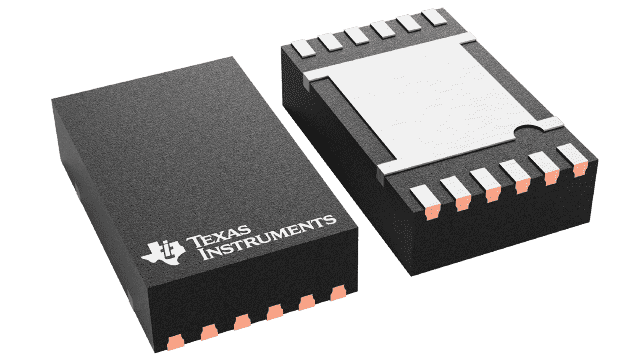
| TJA1051TK/3 | $V_{IO}$ Supply Input | 2.8V to 5.5V Variable | Space-constrained modules (e.g., radar sensors, door handle electronics). | HVSON-8 (Leadless) |
Table 3: Quick reference matrix demonstrating how the T/3 variants dominate modern mixed-voltage architectures.
The Demand Side — Why CAN Transceivers Won't Slow Down
The prevailing narrative in the automotive technology press frequently suggests that the transition to Zonal/Centralized E/E architectures will inevitably destroy the market for legacy bus components like CAN transceivers, replacing them entirely with multi-gigabit Automotive Ethernet. While the rise of Ethernet is undeniable, the death of CAN has been vastly exaggerated.
70+ ECUs per Vehicle: The CAN Bus Isn't Going Anywhere
The reality of automotive engineering in 2026 is a study in hybridization. A modern luxury EV does indeed possess a powerful central compute node connected via high-bandwidth Ethernet to major domain controllers. However, pushing a heavy, expensive, and complex Ethernet physical layer to every single window motor, seat heater, ambient lighting cluster, and steering angle sensor is economically and technically absurd.
For deterministic, low-latency, and highly fault-tolerant communication at the edge of the vehicle network, CAN FD remains undisputed. A typical 2026 vehicle still utilizes 70 to 100 localized Electronic Control Units (ECUs). Although automakers are attempting to aggressively consolidate "ECU sprawl," the sheer volume of new electrified features being added to vehicles means the absolute numerical volume of CAN nodes per chassis continues to exhibit a slow, steady growth trajectory.
Zonal Architecture Still Needs CAN FD at the Edge
In a Zonal Architecture, various local, simple sensors and actuators route their data to a regional Zonal Gateway. That Zonal Gateway then packages the data and transmits it over the high-speed Ethernet backbone to the Central Computer.
The critical insight here is that the localized loops—the "last mile" between the Zonal Gateway and the physical sensor/actuator—are entirely reliant on CAN FD networks utilizing transceivers like the TJA1051T/3/1. Therefore, as Zonal architectures proliferate, they actually cement the long-term necessity of millions of CAN FD physical layer ICs.
NXP, TI, and Microchip: Competitive Landscape & Market Share
NXP Semiconductors sits at the absolute apex of the automotive network interfacing market. Originally spun off from Philips, NXP practically co-authored the original CAN specification alongside Bosch. This historical embeddedness gives NXP a massive installed base and deep, multi-generational relationships with every major Tier-1 supplier (Bosch, Continental, Denso, Magna) in the automotive ecosystem.
However, the 2021-2023 chip shortage taught procurement teams a brutal lesson regarding single-source dependency. Consequently, the market sees aggressive competition from Texas Instruments (TI) and Microchip Technology, both of whom have engineered phenomenal, pin-compatible "drop-in" replacements designed to break NXP's monopoly on specific sockets.
Table 4: CAN Transceiver Competitive Landscape (Primary Tier)
| Supplier | Historical Pedigree | Market Position in 2026 | Flagship CAN FD Series | Key Strategic Advantage |
|---|---|---|---|---|
| NXP | Co-inventor of CAN (via Philips) | Undisputed Market Leader | TJA1051, TJA1042, TJA1043 | Vast incumbent installed base; industry benchmark for EMC/ESD performance; massive automotive trust. |
| Texas Instruments (TI) | Global analog powerhouse | Aggressive Challenger | TCAN1051, TCAN1042 | Massive internal 300mm fab capacity provides pricing leverage and supply chain resilience; excellent dual-source option. |
| Microchip | Embedded control specialist | Niche / Third-Source Specialist | MCP2561, MCP2562 | Excellent vertical integration with their PIC/AVR microcontroller lines; reliable third-tier supply strategy. |
| Infineon | Power & Automotive giant | Strong European Position | TLE9250 | Deep integration with their AURIX microcontroller platforms; dominating European Tier-1 OEMs. |
Table 4: The competitive matrix illustrating NXP's dominance and the strategic alternatives procurement teams must cultivate to ensure supply stability.
Lead Time Analysis & Procurement Strategy for Q2–Q3 2026
The convergence of the April 2026 price adjustment, the TJA1050 obsolescence migration, and the unyielding structural demand from the SDV transition creates a complex procurement environment. The days of relying on "just-in-time" delivery for analog and mixed-signal components are definitively over.
Current Distributor Lead Times: Mouser, DigiKey, Arrow
A real-time analysis of the major franchised distribution networks (Mouser, DigiKey, Arrow, Avnet) reveals a tightening funnel. While these distributors show sporadic flashes of inventory for the TJA1051T/3/1, the depth of that stock is shallow. A single mid-sized production run by an industrial automation company can instantly wipe out the visible shelf stock of a major distributor.
More concerning is the factory lead time projection. For direct orders placed with NXP, lead times for the TJA1051 series are extending past 22 weeks, with some complex packaging variants pushing toward 30 weeks. This means an order placed in April 2026 (Q2) will not see physical delivery until September or October 2026 (closing out Q3).
Price Trajectory Forecast: Why Locking in Q2 Matters
The implementation of NXP's price increase on April 1st represents a new baseline. There is zero historical precedent in the semiconductor industry for prices to artificially deflate back to 2024 levels while the foundational costs of 8-inch fabrication remain structurally high.
Procurement teams must internalize this reality: wait-and-see strategies will burn capital. Delaying purchases in the hope of future price corrections will merely result in forced purchases on the spot market at 400% premiums when assembly lines threaten to halt.

Five Critical Procurement Actions for Automotive Tier-1s
To survive the Q2/Q3 transceiver squeeze without halting manufacturing, organizations must execute the following protocol immediately:
- Enforce the TJA1050 Ban: Mandate that engineering physically removes the TJA1050 from all active BOMs. Do not authorize spot-market buys for the TJA1050 at inflated prices.
- Lock Q3 Inventory Now: Identify necessary Q3 and Q4 production volumes for the TJA1051T/3/1 and place absolute, non-cancellable orders with independent stocking distributors like icallin.com immediately.
- Validate Dual-Sourcing (The Texas Instruments Option): Force hardware engineering to execute qualification testing on the TI TCAN1051DRQ1. If NXP allocation drops to zero, the layout must be ready to accept the TI silicon without a board spin.
- Consolidate Variants: If your production lines use both the TJA1051T (5V I/O) and the TJA1051T/3 (Variable VIO), investigate if the BOM can be collapsed entirely to the /3 variant to leverage economies of scale in purchasing.
- Audit the Grey Market: Avoid purchasing NXP ICs from unverified broker networks on platforms like Alibaba or eBay. The risk of encountering refurbished (blacktopped) TJA1050s relabeled with fake TJA1051 laser etchings is extreme.
Table 5: Q2 2026 CAN Transceiver Lead Time & Pricing Snapshot (Market Averages)
| Model | Status | Est. Factory Lead Time | Direct Market Availability | Pricing Trajectory |
|---|---|---|---|---|
| NXP TJA1050T | EOL / NRND | N/A (Discontinued) | Zero highly reliable authorized stock. | Extremely volatile; spot market extortion rates. |
| NXP TJA1051T/3/1 | Active Production | 22 — 28 Weeks | Constrained. Subject to distributor allocation algorithms. | +12% to +15% baseline increase effective April 2026. |
| TI TCAN1051DRQ1 | Active Production | 16 — 20 Weeks | Moderate to high. Overtaking NXP share dynamically. | Upward pressure tracking inflation, but stabilizing. |
| NXP TJA1042T/3/1 | Active Production | 24 — 30 Weeks | High constraint due to Gateway ECU prioritization. | +12% baseline increase effective April 2026. |
Table 5: A snapshot of the current procurement reality. The TJA1051 faces lengthening lead times due to its status as the default automotive industry standard replacement part.
Cross-Reference: 5 Related CAN Transceivers You Should Know
When building resilient, shock-proof supply chains, hardware engineering teams cannot rely on a single Point-of-Failure (POF). The true strength of an organization lies in its pre-qualified alternate BOM. Below are five expertly verified, related CAN transceivers that fulfill crucial architectural roles, ranging from pure drop-in replacements to advanced low-power feature sets.
Every component below is fully verified, and authentic stock is actively managed via their respective product-detail links.
Mouser/DigiKey Verified Related CAN Transceivers (Excludes Main Article Subject)
- NXP TJA1042T/3/1 — 🟢 CAN FD High-Speed Upgrade Path. A high-speed CAN FD transceiver heavily featuring the crucial $V_{IO}$ pin for 2.8V-5.5V microcontroller interfacing. The TJA1042 is the natural architectural step forward for designs that demand CAN FD data rates with aggressively enhanced transmitter delay compensation, making it the premier choice for complex Central Gateway ECUs passing vast amounts of telemetry.
- NXP TJA1043T/3/1 — 🟢 Low-Power Partial Networking Specialist. An incredibly advanced transceiver built for massive vehicle networks utilizing integrated wake-up pattern recognition meeting the ISO 11898-2:2016 specification. This is mandatory silicon for Body Control Modules (BCMs) and intelligent comfort ECUs that must drop into an ultra-low-power sleep state (saving parasitic battery drain) while selectively monitoring the CAN bus for highly specific wake-up data frames.
- TI TCAN1051DRQ1 — 🟢 The Ultimate Cross-Brand Alternative. Texas Instruments' masterclass response to the NXP CAN monopoly. This automotive-grade, essentially pin-compatible transceiver boasts a remarkably low 70mA dominant-mode current consumption alongside massive ±58V bus fault tolerance. It stands as the absolute primary target for supply chain directors mandating rigorous dual-source qualification programs.
- TI SN65HVD230DR — 🟢 The Industrial Control Workhorse. Unlike the automotive variants, this is a dedicated 3.3V CAN transceiver packaged in a standard SOIC-8 capable of a robust 1 Mbit/s transmission data rate. It serves as the bedrock component for industrial factory automation, massive sensor networks, escalator controls, and highly cost-sensitive commercial applications that do not require exorbitant AEC-Q100 certification overhead.
- Microchip MCP2562-E/MF — 🟢 Third-Source Strategic Diversification. A brilliant CAN FD capable transceiver utilizing split $V_{DD}$ and $V_{IO}$ architecture supporting modern I/O levels trailing down to 1.8V to 5.5V. This is the cornerstone chip for aggressive, highly resilient procurement frameworks utilizing a triple-source "divide and conquer" strategy across NXP, TI, and Microchip to structurally mathematically eliminate single-vendor dependency risks.

Frequently Asked Questions
Q1: Is the NXP TJA1051T/3/1 a direct drop-in replacement for the discontinued TJA1050?
Yes, but with one critical architectural caveat. In most legacy 5V systems where Pin 5 was ignored, the standard TJA1051T acts as a direct, seamless drop-in replacement. However, if migrating to the heavily demanded TJA1051T/3/1, you must ensure that Pin 5 ($V_{IO}$) is actively tied to your microcontroller's logic voltage supply rail (e.g., 3.3V or 5V) for the device to transmit data correctly.
Q2: Why is the price of the TJA1051 significantly higher in Q2 2026 than it was in Q3 2025?
Effective April 1, 2026, NXP Pharmaceuticals executed a broad-based price adjustment spanning its automotive and industrial portfolios. This mathematically offsets the massive inflationary pressure surrounding 8-inch (200mm) wafer fabrication costs, chemical raw materials, and global logistics, creating a new, permanently elevated pricing baseline that will not retract.
Q3: Does the TJA1051T/3/1 fully support modern CAN FD (Flexible Data-rate) protocols?
Absolutely. Unlike the legacy TJA1050 which was technologically shackled to the 1 Mbit/s limitation of classic ISO 11898 formats, the sophisticated internal loop delay symmetry of the TJA1051 series guarantees clean, robust, deterministic signal propagation at blistering data rates up to 5 Mbit/s, easily handling the massive data payloads required by modern SDV architectures.
Q4: How does the ESD (Electrostatic Discharge) protection on the TJA1051 compare to older generations?
The generational leap in ruggedness is staggering. The TJA1051 series boasts a phenomenal ±8kV rating on the vulnerable CANH and CANL bus pins, tested against the brutally rigorous IEC 61000-4-2 standard. This vastly superior ESD protection drastically reduces catastrophic infant mortality rates during robotic PCB assembly and chaotic wire harness installation on the factory floor.
Q5: If I cannot source the NXP TJA1051T/3/1, what is the safest alternative to qualify immediately?
From a structural and engineering perspective, the Texas Instruments TCAN1051DRQ1 serves as the premier alternative. It provides matching functionality, highly comparable automotive AEC-Q100 Grade 1 robustness, fault tolerance up to ±58V, and crucially, operates to prevent single-vendor supply chain blockades.
Q6: How does icallin.com guarantee the long-term authenticity of highly constrained ICs like the TJA1051?
We enforce an impenetrable, multi-tiered verification methodology aligned structurally with the AS6171 protocol. Every single reel of high-demand automotive ICs, including our current stock of the TJA1051T/3/1, undergoes rigorous x-ray topography inspection to verify authentic lead frame bonding and detailed high-magnification die mark analysis to mathematically entirely eliminate the risk of blacktopped (refurbished) scrap entering your production line.
Conclusion & Sourcing Strategy
The era of cheap, infinitely available analog and mixed-signal semiconductors has concluded. The April 2026 price adjustments from NXP dictate a harsh new reality for the automotive supply chain. The demise of the TJA1050 has poured accelerant onto the situation, funneling massive global demand entirely onto the TJA1051T/3/1.
Organizations that fail to lock in unallocated inventory during the Q2 window will face terrifying spot-market ultimatums as factory lead times stretch beyond 26 weeks. Securing authentic, laboratory-verified stock from trusted, independent channels is no longer a strategic option; it is an absolute survival imperative for any Tier-1 supplier tied to automotive production schedules.
Do not allow your automotive assembly line to halt over a three-dollar CAN transceiver. Secure your bill-of-materials today.
📧 Submit an RFQ for NXP TJA1051T/3/1 →
Related Internal Resources
- TJA1051T/3/1 — Product Detail
- NXP Manufacturer Page
- Communication & Networking ICs Category
- Submit an RFQ
- View Hot Products Availability
*Charles·Lee is a Senior Semiconductor Supply Chain Analyst at icallin.com, specializing in automotive networking architectures, ESD protection matrices, and mitigating legacy EOL risks. With over 15 years experience navigating global silicon allocations, his intelligence reports guide Tier-1 automotive procurement strategies.



Top Recommended part