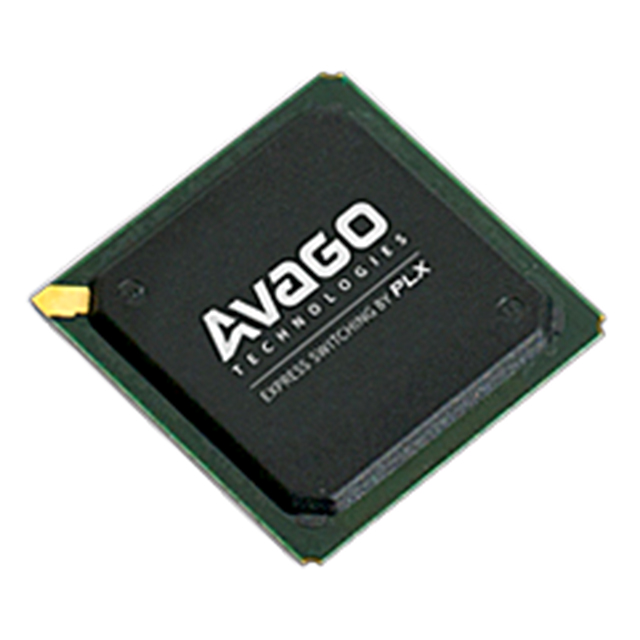


PEX8618-BA50BC G In Stock: Broadcom PCIe Switch Availability
PEX8618-BA50BC G In Stock: Why PCIe Switch Availability Still Decides Server and AI System Timelines
Executive Summary
For OEMs, EMS providers, and infrastructure hardware teams, the sudden unavailability of a mature interconnect component can freeze an entire build plan. The PEX8618-BA50BC G is a clear example. Although it belongs to an older PCIe generation, it still appears in server, storage, communications, and control-plane designs where board layouts, BIOS behavior, and qualification work are already fixed.
That is why this is not just a stock notice. It is a project-timeline article. When a validated PCIe switch disappears from the sourcing window, buyers are not simply facing a higher unit price. They may be facing motherboard re-layout, firmware changes, signal-integrity revalidation, and months of schedule damage.
For urgent buyers, verified stock can be more valuable than a forced redesign. The practical goal is to secure the exact device, confirm date code and packaging status, and keep production moving.
Introduction: The Reality of the Infrastructure Sourcing Crisis
When a procurement manager or hardware engineer searches for the exact manufacturer part number PEX8618-BA50BC G, they are rarely browsing out of curiosity. They are usually trying to solve an immediate infrastructure problem: a server board, storage controller, communications card, or embedded platform still depends on a mature PCIe switch that has become difficult to source through normal channels.
There is a persistent misconception in the market that once a newer PCIe generation exists, older switches become commercially irrelevant. In practice, that is not how deployed hardware programs work. Mature boards do not disappear just because the standards roadmap moved on. Existing designs remain in production, field maintenance continues, and long-tail platform support obligations often extend far beyond the manufacturer’s mainstream sales cycle.
That is why stock availability for a part like PEX8618-BA50BC G still matters. For many buyers, the real choice is not between this switch and a “better” new one. The real choice is between securing verified stock now or absorbing the cost, delay, and risk of redesigning around its absence.
Why PEX8618-BA50BC G Still Matters in Infrastructure Designs
The PEX8618 remains commercially relevant because it solves a specific board-level problem cleanly: it provides 16 lanes of PCI Express switching with up to 16 configurable ports, enabling designers to fan out limited upstream connectivity across multiple downstream devices without rewriting an entire platform architecture.
In practical infrastructure designs, that flexibility is still useful in several places:
- server motherboard risers and expansion cards
- storage controller and backplane logic
- communications and control-plane cards
- embedded high-I/O boards
- sustainment and maintenance builds for mature deployed systems
The device also brings features that are difficult to dismiss as “legacy leftovers.” Port flexibility, hot-plug support, low cut-through latency, and non-transparent bridging options can all be tied directly to system behavior. When a design depends on those behaviors, replacing the switch becomes far more difficult than simply matching lane count.
The illusion of obsolescence
A device can be obsolete on paper and still be mission-critical in real production. That is exactly what happens with many mature PCIe switches. Once a board is qualified, every element around that switch becomes coupled to it:
- the BGA footprint and routing pattern
- the power-delivery design
- BIOS and PCIe enumeration assumptions
- thermal behavior
- hot-plug handling
- fail-over logic where applicable
In other words, “older” does not mean “unimportant.” It often means “deeply embedded in a mature platform.”
Port flexibility still matters
One reason the PEX8618 remains relevant is configuration flexibility. A single 16-lane switch that can be partitioned across multiple ports still solves real fan-out problems in infrastructure hardware. In server and storage designs, that can mean expanding a limited upstream PCIe resource across RAID, network, management, or legacy peripheral endpoints. In communications and embedded systems, it can simplify control-plane and I/O expansion logic.
For buyers, that means the value of stock is not abstract. If the board was designed around this topology, immediate availability may determine whether the next production lot ships on time.
When Missing PCIe Switch Stock Becomes a Board-Level Schedule Problem
Once stock disappears, the problem quickly escalates from purchasing inconvenience to engineering disruption.
Active switching is not passive lane splitting
A common assumption is that CPU lane bifurcation can always replace a missing PCIe switch. In practice, passive bifurcation is not a universal substitute. It depends on BIOS support, topology constraints, and physical routing assumptions. A board designed for an active switch may not be able to recover equivalent behavior through firmware settings alone.
BOM freeze and layout lock-in
By mass-production stage, the BOM is usually frozen. The PEX8618-BA50BC G uses a specific 324-ball HSBGA footprint and sits in a routing environment that is already optimized for lane escape, stack-up, via strategy, and thermal behavior. Once that is fixed, changing the switch often means:
- re-laying high-speed differential pairs
- re-running signal-integrity analysis
- revisiting power sequencing and decoupling
- validating thermal margins again
- rebuilding prototype boards
That is not a small sourcing adjustment. It is a board program.
BIOS, firmware, and software burden
The switch is also tied to low-level platform logic. PCIe topology, device IDs, enumeration paths, hot-plug expectations, and fail-over behaviors do not always move cleanly to a new device. For a control-plane or server-support board, that can force BIOS edits, driver verification, and additional software regression work.
For buyers under schedule pressure, this is the moment when stock becomes a project-protection issue rather than a commodity issue.
What Buyers Actually Need from an In-Stock Source
Urgent buyers do not just need a listing. They need proof.
A serious in-stock source should be able to show control over the physical material, not just visibility into someone else’s broker network. For a mature infrastructure IC like PEX8618-BA50BC G, that means the article should reinforce the following expectations:
- exact full MPN confirmation
- manufacturer confirmation
- date code visibility
- packaging status
- vacuum-seal or moisture-control handling where relevant
- warehouse or label-photo proof
- clear dispatch readiness
Exact MPN clarity
Suffix accuracy matters. The buyer is not searching for a generic PEX8618 family mention. They are searching for PEX8618-BA50BC G. If the listing is vague about package, suffix, or compliance state, trust drops immediately.
Date code and traceability
Because this is a mature part, buyers need clear date-code visibility and traceability confidence. In urgent procurement, ambiguity around origin or storage history often kills the transaction faster than price.
Packaging and handling status
For infrastructure-grade BGA devices, packaging condition influences buyer confidence. Vacuum packaging, moisture handling discipline, and clear tray or reel status are not presentation details. They are part of the quality signal.
Warehouse proof and dispatch readiness
The fastest way to reduce skepticism is visual evidence tied to real stock control:
- original labels
- quantity labels
- date-code labels
- tray or vacuum packaging photos
- warehouse photos with company watermark
- same-day or next-day dispatch language when true
That is how a stock article becomes commercially credible.
The Technical Relevance of PEX8618-BA50BC G in Real Systems
This article is not meant to be a generic PCIe tutorial, but the buyer still needs enough technical context to understand why the part matters.
16-lane switching and configurable ports
The PEX8618 gives board designers a flexible lane-distribution resource. That matters when one upstream root complex must be expanded across multiple endpoints in a compact infrastructure design.
Cut-through latency
Low cut-through latency matters in management paths, communications systems, and any environment where traffic handling cannot tolerate unnecessary switching delay.
NTB, dual-host, and fail-over relevance
Non-transparent bridging and dual-host/fail-over relevance are especially important in high-availability systems. In storage and communications gear, that kind of architectural feature is not ornamental. It can be part of the core availability strategy.
Hot-plug support
Hot-plug support on every port is useful in infrastructure environments where serviceability and field replacement matter. Again, this is not just a spec-sheet bullet. It is part of why a mature switch may stay in a platform for years.
Where Immediate Stock Has the Highest Real-World Value
The urgency around PEX8618 stock is not uniform across all applications. It is highest where redesign cost is large and downtime is expensive.
Server motherboard risers and expansion logic
Server platforms often use PCIe switches to fan out limited host connectivity. If that switch is unavailable, the riser or expansion design may stop moving entirely.
High-availability storage systems
Storage systems with high-availability architecture can depend on stable PCIe switching and related fail-over logic. Replacing that switch is rarely simple.
Communications platforms and control planes
Router, switch, and communications-control boards frequently depend on mature PCIe interconnect layouts that are already proven in deployment. For those teams, preserving schedule can matter more than chasing a “newer” switch.
Embedded high-I/O systems
Specialized embedded platforms with multiple endpoint devices may rely on the switch to simplify architecture and routing density. Availability matters because redesign can spread into the entire board.
Sustainment and MRO demand
Long-life industrial, enterprise, defense, and field-maintenance programs often need exact mature components for sustainment builds. Those customers are often the fastest to act when stock appears.
Why Real Stock Can Be More Valuable Than a Forced Redesign
This is the commercial center of the article.
If a team cannot source the switch, the fallback is usually some form of redesign estimate. That estimate is often more expensive than procurement teams initially expect.
The cost of re-engineering
A switch change can trigger:
- new PCB routing work
- signal-integrity and compliance review
- thermal revalidation
- BIOS and firmware changes
- new prototype runs
- engineering hours across hardware, software, QA, and program teams
The timeline impact
An urgent stock buy can put material into the build path in days. A redesign can consume months.

Figure: Deployment timeline comparison between immediate in-stock procurement and forced hardware redesign for PEX8618-dependent systems. The chart highlights how redesign work can extend project schedules far beyond the sourcing window for verified stock.
The comparison above is what many urgent buyers are really paying to avoid. They are not simply buying a part. They are buying schedule preservation.
What a Serious In-Stock Listing Should Show
To convert an urgent reader into an RFQ, the article should not stop at technical relevance. It should also tell the buyer exactly what they should expect from a serious stock source.
A credible listing for PEX8618-BA50BC G should show or confirm:
- exact full MPN
- manufacturer identity
- date code
- package condition
- quantity structure
- quality handling status
- stock photos with watermark
- dispatch readiness
That is how a buyer distinguishes controlled inventory from ghost stock.
Inventory Proof Table
| Full MPN | Manufacturer | Package | Date Code | Packaging Status | SPQ / MOQ | Stock Status | Dispatch Readiness | Notes |
|---|---|---|---|---|---|---|---|---|
| PEX8618-BA50BC G | Broadcom / PLX | 324-ball HSBGA | To be confirmed upon RFQ | Original packing / vacuum condition to be confirmed | Available on request | Verified via sales confirmation | Immediate dispatch subject to final QA check | Exact quantity and label photos available upon request |
Application Relevance Table
| Application Area | Why PCIe Switching Matters | Why PEX8618 Still Fits | What Happens If Supply Is Missing | Urgency Level |
|---|---|---|---|---|
| Server risers and expansion boards | Fans out limited host PCIe resources | Mature, proven board-level fit | Board delay or redesign | High |
| Storage systems | Supports controller-side expansion and high-availability architecture | Stable integration in mature platforms | Requalification and firmware work | Very High |
| Communications platforms | Supports control-plane and I/O expansion | Existing layouts often remain in service for years | Program delay and validation risk | High |
| Embedded high-I/O systems | Connects multiple endpoints in constrained board designs | Compact, known architecture | Layout and SI rework | Medium-High |
| Sustainment / MRO programs | Exact part continuity matters in long-life support | Avoids forced platform change | Fleet maintenance disruption | Very High |
Project Impact / Urgency Table
| Buyer Situation | Risk If Stock Is Missing | Why Immediate Stock Helps | Likely Procurement Behavior | Conversion Opportunity |
|---|---|---|---|---|
| Production build waiting on one missing switch | Shipment delay | Preserves original BOM and schedule | Urgent RFQ and stock confirmation | Very High |
| Mature board under maintenance support | Service disruption | Supports exact-form sustainment | Fast inquiry for traceable inventory | High |
| Engineering team evaluating redesign | Engineering and validation cost | Avoids unnecessary redesign trigger | Requests quote plus technical proof | High |
| Broker market full of ghost stock | Trust failure | Warehouse proof reduces risk | Seeks images, labels, date code | Very High |
| Global program under time pressure | Lost deployment window | Dispatch-ready stock compresses lead time | Immediate commercial escalation | Very High |
Blog Excerpt
When a mature PCIe switch like the Broadcom PEX8618-BA50BC G becomes difficult to source, the impact is bigger than procurement inconvenience. It can disrupt server, storage, communications, and embedded board timelines. This article explains why verified in-stock supply still matters and what urgent buyers should look for before committing.
Recommended Next Steps
If your team is urgently evaluating this exact switch for a live server, storage, or communications project, review the full PEX8618-BA50BC G product page first to confirm the exact MPN and move faster toward quotation.
If you are sourcing within the same supplier ecosystem, our Broadcom page can help you check related infrastructure and interconnect devices that may matter to the same program.
For buyers under schedule pressure, our latest hot products page is the fastest way to review other featured in-stock parts that may help protect delivery timelines.
If you are ready to verify quantity, date code, packaging condition, or dispatch readiness, submit an RFQ now and our team can respond with current stock support for your build.
If you want to understand how we handle urgent sourcing requests, inventory verification, and project-driven component support, visit About Us.
Soft CTA
If your server, storage, communications, or embedded program is waiting on PEX8618-BA50BC G, do not let one missing PCIe switch trigger a full redesign cycle. Request current quantity confirmation, date code details, packaging status, and stock images now. For urgent builds, verified inventory can be the fastest way to protect your deployment schedule.


Top Recommended part