

Immediate Availability: Empowering High-Performance Computing with Xilinx XC7K325T-2FFG900I FPGAs in Stock!
Immediate Availability: Empowering High-Performance Computing with Xilinx XC7K325T-2FFG900I FPGAs in Stock!
When a project is already built around the XC7K325T-2FFG900I, a 52-week lead time is not just inconvenient — it becomes a direct schedule risk. For many procurement teams and engineering managers, the real issue is no longer whether this Kintex-7 FPGA still matters. It clearly does. The more urgent question is how quickly verified stock can be secured when production, validation, or delivery milestones are already moving.
This is exactly why XC7K325T-2FFG900I in stock searches carry such strong purchase intent. Buyers looking for this exact device are rarely browsing casually. In most cases, they are trying to keep an approved design moving, avoid a forced redesign, or protect a production schedule from slipping because one core FPGA is suddenly difficult to source through standard channels.
The challenge is familiar across networking, high-performance computing, video processing, and industrial embedded systems. The Xilinx XC7K325T-2FFG900I stock situation is shaped by the same tension many high-value legacy and long-lifecycle devices face today: the architecture remains highly relevant in deployed systems, but available inventory is uneven, and franchised lead times can be too long to support real project timelines. In that environment, immediate availability becomes more than a convenience. It becomes a practical procurement advantage.
This article explains why the XC7K325T-2FFG900I continues to matter in real applications, why redesign is often not the realistic answer, and why immediate stock availability can carry more operational value than theoretical savings tied to delayed supply.
Why the XC7K325T-2FFG900I Still Matters in Real Designs
The XC7K325T-2FFG900I remains important because it sits in a part of the FPGA market where performance, integration, and long-term design stability intersect. It belongs to the Kintex-7 family, a generation that has remained deeply embedded in networking infrastructure, data movement, industrial platforms, and compute-heavy designs that were optimized years ago and are still commercially active today.
At a technical level, this device offers a combination of logic density, DSP capability, embedded memory, and high-speed serial connectivity that continues to fit many established platforms extremely well. A design team that already invested engineering time in this architecture is not evaluating it in abstract terms; they are usually dealing with a board, firmware flow, validation history, and deployment target that already depend on it.
Understanding the Specific Device Configuration
The full part number matters. XC7K325T identifies the device itself within the Kintex-7 family. The FFG900 package points to a high-I/O, fine-pitch package format used in dense, interface-heavy designs. The -2 speed grade places the device in a stronger performance tier suited to demanding signal and timing requirements. The I suffix indicates industrial-grade temperature capability, which matters in deployments where environmental margins are tighter than standard commercial conditions.
That means procurement teams searching buy XC7K325T-2FFG900I are not simply looking for “something similar.” They are often looking for a very specific performance, package, and environmental combination that has already been approved in a real design.
Logic, DSP, and Embedded Memory Resources
The XC7K325T-2FFG900I offers a resource profile that makes it valuable in applications requiring heavy signal processing, deterministic data handling, or substantial programmable logic density. The device combines a large logic fabric with meaningful DSP and Block RAM resources, which is why it still appears in systems that need data-path acceleration, hardware-level control, and fast response under tight latency constraints.
In practice, this matters because a design using these resources is usually already balanced around them. If the original architecture uses a large share of available DSP slices, embedded memory, and configurable logic, then moving to a different FPGA is rarely a simple procurement substitution. It quickly becomes an engineering event.
High-Speed I/O and Interface Dependence
One of the strongest reasons this device remains relevant is its interface value. Kintex-7 devices in this range are often chosen because they support high-throughput data movement and complex board-level interface requirements. In systems that rely on multiple fast serial links, dense I/O planning, or tightly managed board routing, the FPGA is not just a processing component — it is part of the board architecture itself.
That is why XC7K325T-2FFG900I supplier searches usually come from teams that are already committed to this device class. The dependency is architectural, not incidental.
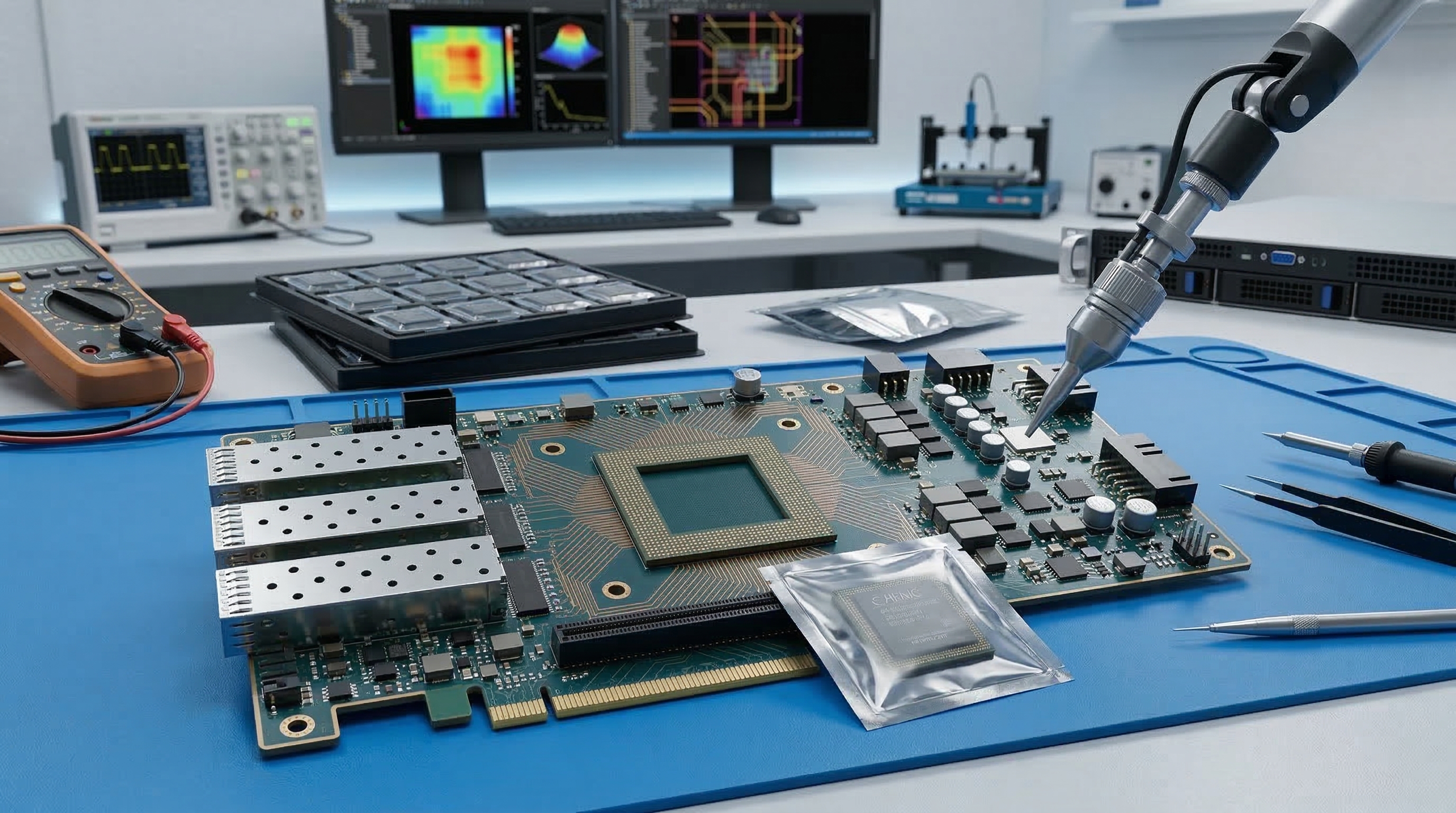
Where This FPGA Is Used: HPC, Networking, Video, and Industrial Systems
The application value of the XC7K325T-2FFG900I is easier to understand when viewed through real deployment contexts rather than generic component categories.
Networking and Communications Systems
In communications hardware, especially in systems that depend on high-speed serial connectivity, data packet handling, and deterministic throughput, this class of FPGA remains highly practical. Designs involving backplanes, optical links, or interface-heavy network boards often rely on the balance between logic resources and transceiver capability that Kintex-7 devices provide.
Once that board is routed and validated around a specific FPGA, the cost of changing it is rarely limited to component sourcing. It usually spills into SI review, timing closure, board rework, and revalidation.
High-Performance Computing and Data Throughput Platforms
In high-performance computing and data acceleration environments, FPGAs like the XC7K325T-2FFG900I are often used where fixed-function hardware timing, low latency, or parallelizable logic still offer advantages over a purely CPU- or GPU-driven path. Whether that appears in financial systems, edge compute appliances, or data acquisition platforms, the design decision is usually deliberate.
This is why Kintex-7 XC7K325T spot inventory has practical value: buyers in these environments are often trying to preserve known-good hardware behavior instead of reopening an already optimized platform.
Video, Imaging, and Sensor-Heavy Platforms
Video and imaging systems often depend on fast data buffering, interface conversion, preprocessing, and deterministic handling of multiple streams. In these designs, the FPGA does not sit at the margin of the system. It sits in the middle of the data path. That makes part continuity more important than surface-level component comparisons.
Industrial Embedded and Harsh-Environment Systems
Industrial and infrastructure deployments have their own sourcing logic. In these applications, lifecycle stability and environmental margins matter as much as raw feature count. A board approved for long-term deployment in a demanding setting is rarely redesigned lightly. If the bill of materials specifies the industrial-grade XC7K325T-2FFG900I, that requirement often reflects system-level reliability and qualification planning, not just procurement preference.
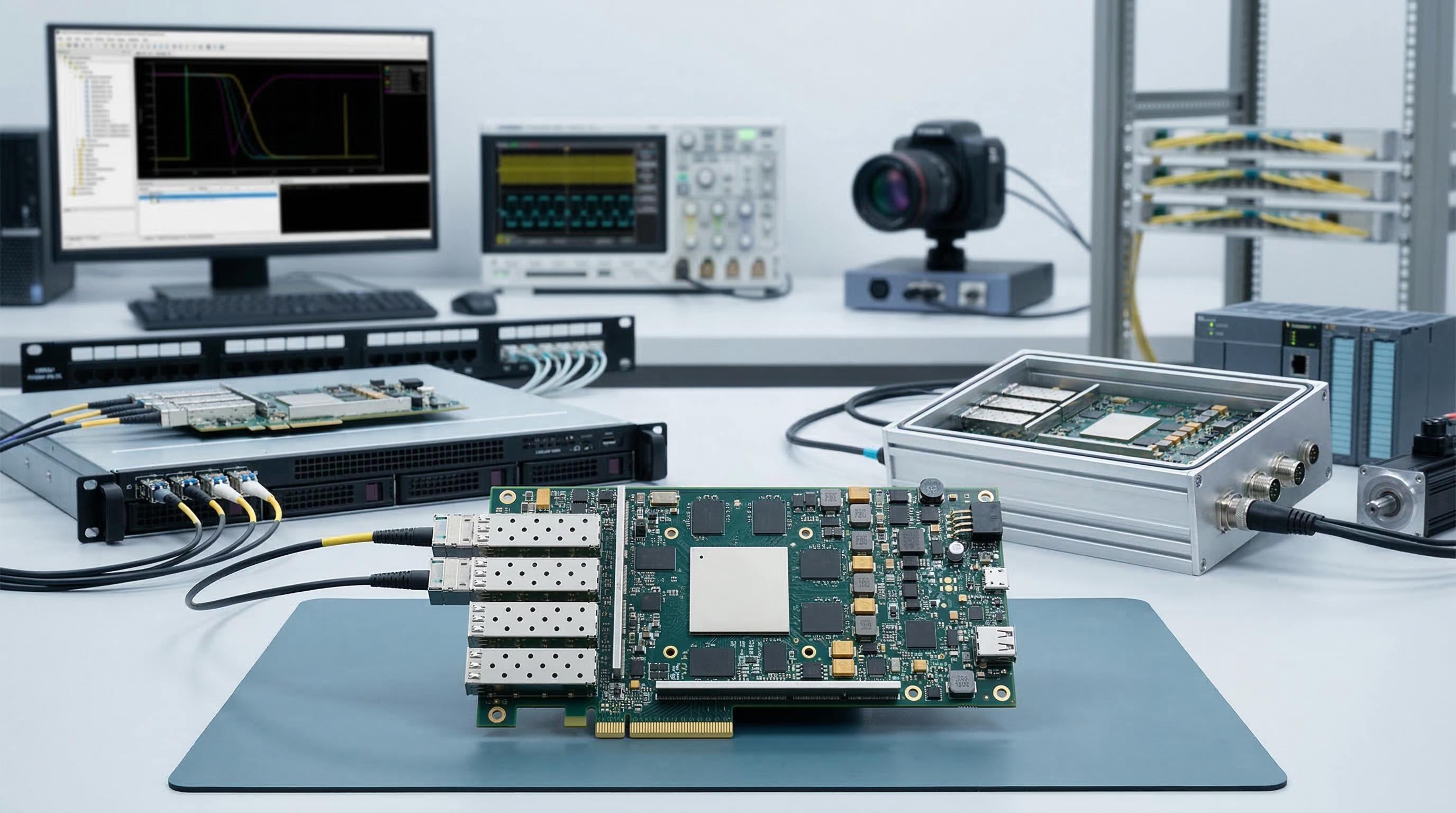
Why Lead Times and Open-Market Tension Matter for This Device
The supply side of this part cannot be separated from its deployment reality. The reason buyers search XC7K325T-2FFG900I lead time is not simply curiosity. It is because traditional sourcing channels often fail to match the urgency of real project schedules.
Kintex-7 devices sit in an interesting part of the market. They are not the newest architecture, but they remain heavily relevant because so many systems were successfully designed around them and continue to ship. Long lifecycle support helps preserve design confidence, but it also keeps demand active. When demand remains active and supply is not immediately visible, procurement pressure increases quickly.
In that setting, buyers move beyond normal sourcing behavior. Instead of passively waiting for standard distribution timing, they start evaluating:
- whether open-market inventory is available
- whether stock is physically verifiable
- whether authenticity risk can be controlled
- whether immediate availability can protect the project faster than waiting
This is why XC7K325T-2FFG900I distributor and XC7K325T-2FFG900I ready to ship searches are so commercially strong. They reflect a shift from ordinary BOM planning to risk-controlled urgent procurement.
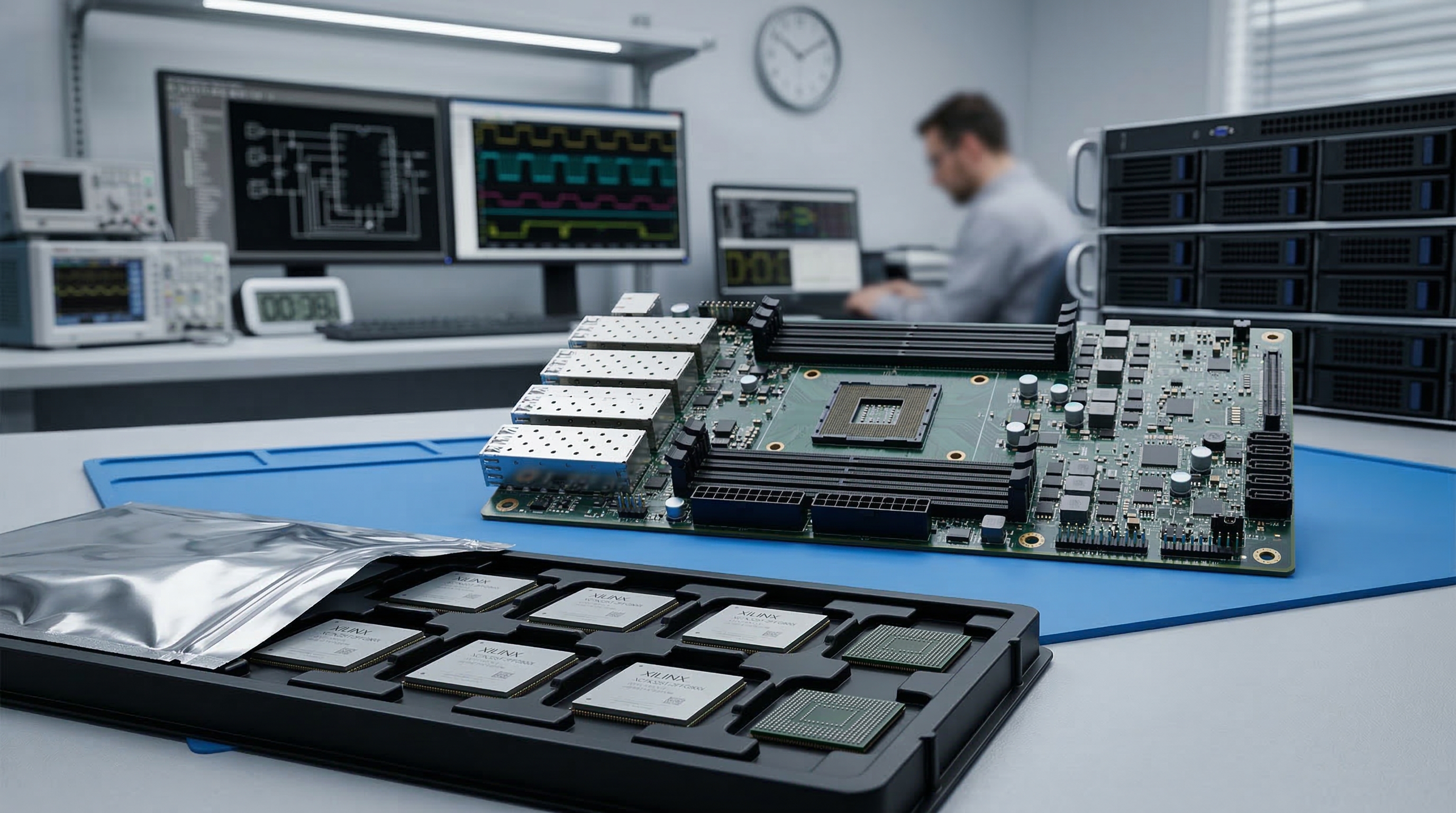
Why Redesign Is Often Not the Real Answer
From a distance, redesign can sound like a clean strategic answer: if one part is hard to source, move to a newer FPGA. In real engineering organizations, that answer is often neither fast nor economical.
Board-Level Constraints
A board already designed around a dense FPGA package with substantial I/O use is not easy to re-route. Signal integrity, power distribution, placement constraints, and thermal assumptions are already tied to that device. Replacing the FPGA frequently means revisiting more than the FPGA footprint itself.
Logic Allocation and Timing Closure
Even if an alternative FPGA appears comparable on paper, internal architecture, timing behavior, available resources, and IP reuse can all change the engineering burden dramatically. A project that already closed timing and passed functional validation on Kintex-7 is not automatically portable in a low-risk way.
Validation and Certification Pressure
For infrastructure, industrial, or regulated equipment, the redesign cost is not just PCB effort. It may include additional test cycles, compliance rework, firmware adaptation, and delayed deployment. For many organizations, that makes immediate exact-part procurement a much more practical near-term decision.
This is the real context behind XC7K325T-2FFG900I price searches. Buyers are not just comparing unit costs. They are measuring procurement choices against the cost of delay, redesign, and interrupted schedules.
What Immediate Stock Availability Changes for Procurement Teams
When standard channels are slow and redesign is unattractive, XC7K325T-2FFG900I in stock becomes a meaningful operational advantage.
Immediate availability changes procurement behavior in several ways:
- It reduces uncertainty around project timing.
- It gives supply chain teams a way to protect current builds.
- It helps engineering avoid disruptive redesign discussions.
- It shortens the path from sourcing problem to RFQ action.
- It allows teams to prioritize continuity instead of contingency planning.
For project owners, this is especially important. A missing FPGA can stall an otherwise complete build. In that situation, the value of verified stock is not abstract. It is tied directly to whether a board moves into assembly, whether a deployment stays on schedule, and whether a customer delivery window remains realistic.
This is where a capable XC7K325T-2FFG900I supplier adds real value. The role is not just to list a part number. It is to reduce timing uncertainty, support fast communication, and provide more confidence than a passive lead-time quote can offer.
Why In-Stock Access Has More Value Than Theoretical Cost Savings
Price sensitivity is real in electronics procurement, but this class of component is a good example of why pure unit-price logic can become misleading.
If a buyer waits for an ideal pricing scenario but loses weeks or months in the process, the larger project may carry a much higher cost:
- delayed validation
- postponed production
- stalled system integration
- missed launch windows
- internal engineering reallocation
- customer delivery pressure
That is why Xilinx XC7K325T-2FFG900I stock should be framed as schedule protection, not just inventory availability. In many cases, getting the correct part into the build at the right time matters more than optimizing spreadsheet pricing assumptions around delayed supply.
This is also why XC7K325T-2FFG900I ready to ship has such strong practical meaning in B2B search behavior. For urgent buyers, ready-to-ship stock reduces the gap between component search and production decision.
What Buyers Should Confirm Before Sending an RFQ
Even when urgency is high, serious buyers still need a disciplined process. Before treating XC7K325T-2FFG900I in stock listings as production-ready purchasing options, teams should confirm several practical points.
Exact Part-Number Match
The full device string matters. Confirm the exact package, speed grade, and industrial suffix. For established systems, “close enough” is often not good enough.
Stock Authenticity and Traceability
Buyers should look for confidence around physical stock, component handling, and traceability. In urgent procurement, authenticity risk is part of the decision, not a secondary issue.
Quantity and Dispatch Readiness
If the project depends on immediate continuity, timing matters almost as much as inventory itself. Confirm whether the stock is genuinely available to move and whether quantities align with short-term build needs.
Project Context
Procurement should also confirm that the request reflects real project timing. If the system is already locked into the part, an RFQ becomes more than a pricing exercise — it becomes part of schedule recovery.

FAQ
Why is the XC7K325T-2FFG900I still difficult to source through standard channels?
Because this device remains relevant in long-lifecycle systems while traditional supply channels may not align with urgent demand. Many approved designs still depend on Kintex-7 architecture, so buyers continue searching for exact-part continuity rather than migrating immediately.
Why do buyers specifically search XC7K325T-2FFG900I in stock?
Because they often need the exact device for an active build, validation cycle, or delivery schedule. In-stock intent usually signals urgent procurement rather than general research.
Is redesigning around a different FPGA usually the better answer?
Not in many near-term situations. If the board, logic allocation, routing, and validation flow are already tied to this device, redesign can cost far more time and engineering effort than securing verified stock.
What makes the industrial-grade suffix important?
The industrial grade matters in systems that need wider operating margins and more demanding environmental support. If the BOM specifies the industrial version, that usually reflects system-level deployment requirements, not an optional preference.
What should buyers confirm before treating XC7K325T-2FFG900I spot inventory as production-ready stock?
They should confirm exact part-number match, stock authenticity, traceability, available quantity, and whether dispatch timing aligns with the project’s build requirements.
Conclusion
The XC7K325T-2FFG900I remains a highly relevant FPGA because many real systems still depend on its combination of logic density, interface strength, and deployment suitability. In networking, compute, imaging, and industrial platforms, it often remains deeply embedded in approved hardware where redesign is slow, expensive, and operationally disruptive.
That is why XC7K325T-2FFG900I in stock is not just a search term. It reflects a real procurement need under real schedule pressure. For many teams, the practical decision is not whether a newer FPGA exists. It is whether verified stock of the correct device can be secured quickly enough to keep the current project moving.
In that context, immediate availability has clear value. It protects continuity, reduces avoidable redesign pressure, and helps procurement teams respond to lead-time tension with a more realistic, lower-risk action path.
Comparison Tables
Table 1: XC7K325T-2FFG900I Core Specification and Application Value
| Technical Area | Device Context | Practical Value in Real Projects |
|---|---|---|
| FPGA Family | Kintex-7 | Widely used in established performance-oriented platforms |
| Device | XC7K325T | Balanced resource profile for interface-heavy and compute-heavy designs |
| Package | FFG900 | Supports dense board-level integration and substantial I/O planning |
| Speed Grade | -2 | Suitable for stronger timing and performance requirements |
| Temperature Grade | Industrial | Valuable in harsher deployment environments and long-lifecycle platforms |
| Logic / DSP / Memory Resources | Mid-to-high capability class | Supports demanding data-path, control, and acceleration functions |
| High-Speed Interface Relevance | Strong | Important in networking, compute, and video-oriented applications |
Table 2: Stock vs. Wait Procurement Path
| Decision Factor | Wait for Standard Lead Time | Secure Verified Spot Stock |
|---|---|---|
| Project Timing | High delay risk | Faster recovery path |
| Production Continuity | Vulnerable to schedule slips | Better chance of maintaining build flow |
| Engineering Burden | Redesign pressure may increase | Supports existing architecture continuity |
| Validation Schedule | Can be delayed by component availability | More likely to stay aligned with project timing |
| Commercial Risk | Hidden cost of waiting may grow | Faster action can reduce downstream disruption |
Soft CTA
If your team is working around a defined Kintex-7 design and needs a realistic path forward, it may be worth reviewing current XC7K325T-2FFG900I in stock availability before schedule pressure increases further.
You can use icallin.com to review availability, discuss urgent stock needs, and submit an RFQ for verified Xilinx FPGA supply when standard lead times are no longer practical.
Recommended Internal Links
If you are evaluating current availability for the XC7K325T-2FFG900I or planning urgent FPGA sourcing, the following pages may be useful:
-
View XC7K325T-2FFG900I Product Details
Review the specific product page for this Xilinx Kintex-7 FPGA and check its sourcing relevance in more detail. -
Explore More Xilinx FPGA Solutions
Browse Xilinx product listings and related FPGA options for broader sourcing and project planning. -
Submit an RFQ
Send your inquiry if your team needs verified availability, urgent stock support, or help with hard-to-find FPGA sourcing. -
Browse Current Hot Products
Explore other active in-stock and high-demand components that may support your ongoing procurement needs.